





.avif)

.svg)
Own Your Brand Identity
Confidence from creation to protection, grounded in trusted intelligence and expertise.



















Your brand, built and defended.
Corsearch is the only partner that connects Trademark intelligence with Brand Protection
.avif)
.avif)
.avif)
.avif)
Solutions powered by Intelligent Technology and Experts
Trademark Solutions
Our trademark solutions blend cutting-edge AI with human expertise to offer unparalleled support to IP professionals at every stage of the trademark lifecycle – from management to infringement.
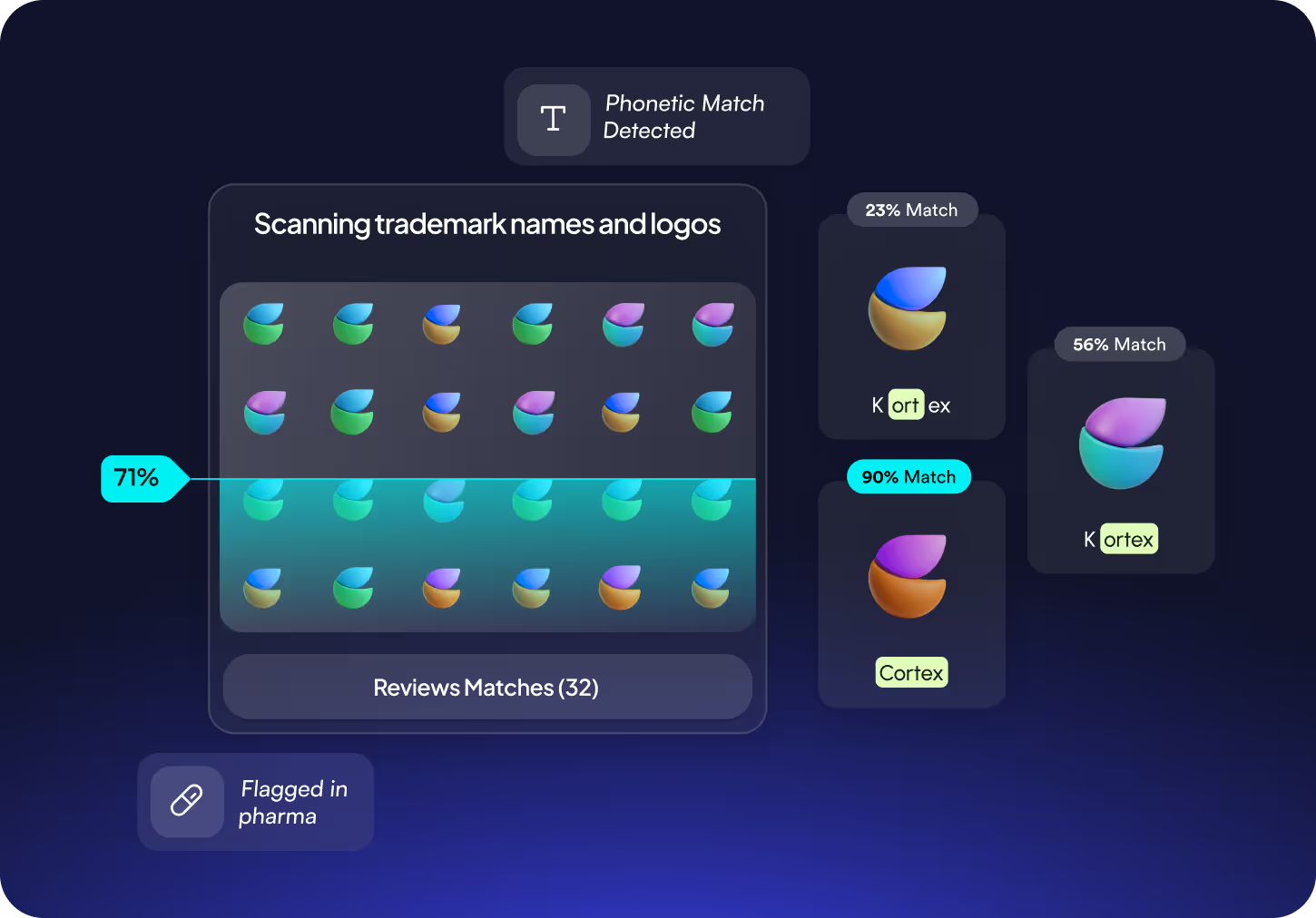


Explore the TrademarkNow Platform
TrademarkNow provides reliable and mature AI-powered end-to-end trademark solutions.
.webp)
Brand Protection Solutions
Once your assets are registered, the work begins. Corsearch’s Brand Protection solutions combine world-class technology and deep expertise to remove fakes, clean your online channels, and give you full control over how your brand reaches the world.
.webp)

Investigations 360


Revenue Recovery 360

Protect Your Domains

Distribution Control

CVAN


Discover the
Zeal 2.0 Platform
Understand the technology behind it and talk to a Brand Protection expert.
.webp)

Content
Protection Solutions
Defend your creative works - from books and gaming to music and film. Our AI and expert analysis disrupt piracy across all platforms, preserving your value and reclaiming lost revenue.
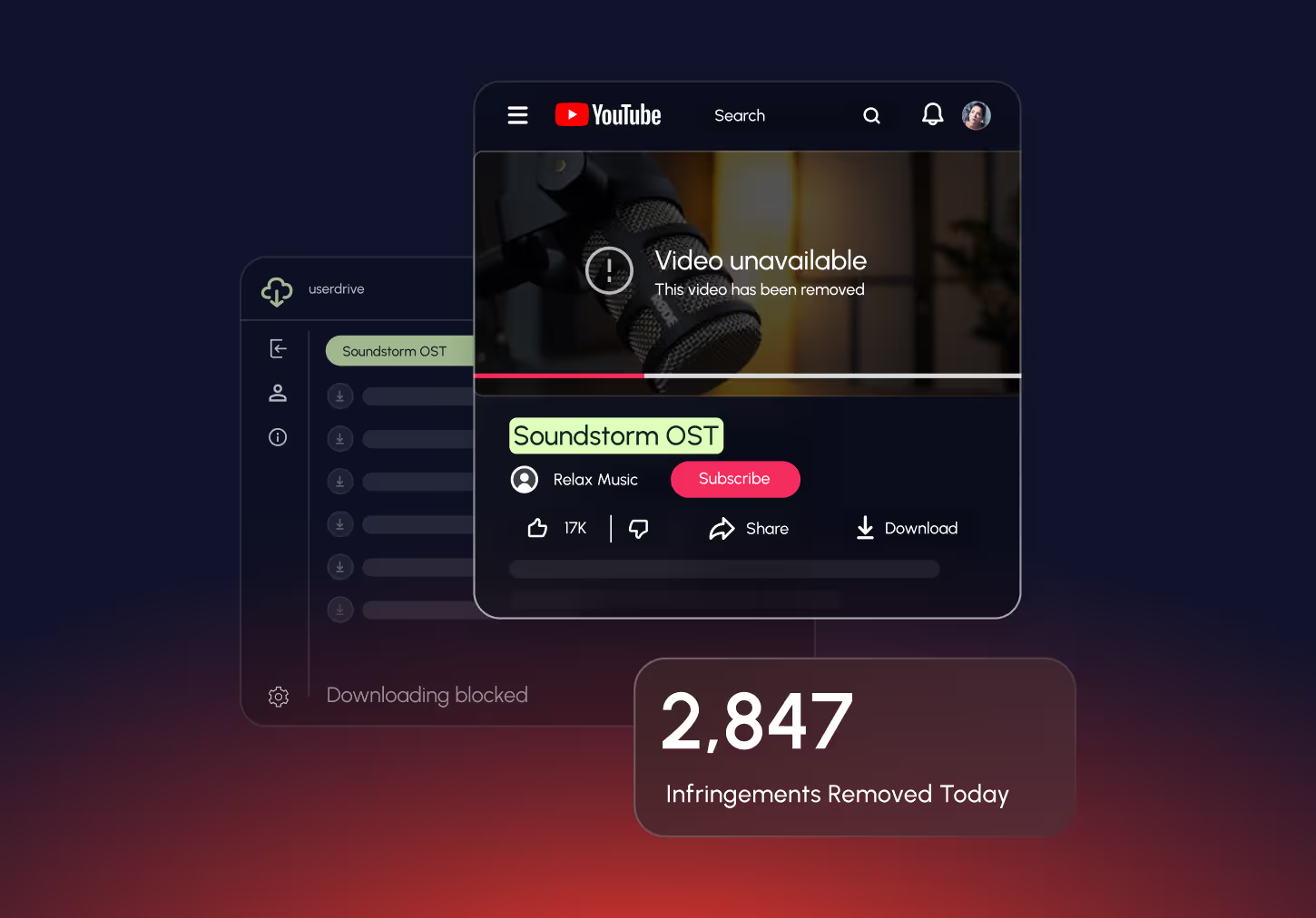
Talk to an Expert
Speak to Corsearch today to find out how we help Content Protection specialist around the world.
What Our Customers Say About Us



“Speed is a crucial thing. The tool needs to be easy to implement, user-friendly and logical from our standpoint.”


“This automated monitoring and the use of AI is just mind-blowing and just such a great feature.”

“Corsearch’s monthly reports provide valuable insights for us in terms of the infringement landscape, geographical spread and potential loss as a dollar value.”

“Trademark clearance results from TrademarkNow drove a 40% lift in our IP legal team’s delivery time of new brand name clearance.”

“We needed to unmask rogue sellers - we didn’t know who they were nor did we understand their source of our products, and that’s what Corsearch has helped us with.”
“When Corsearch had presented the Revenue Recovery 360 option, it was an offensive role for us to take that not only was very successful in stopping bad actors, but also helped fund the growth of an IP strategy.”
“The platform’s end-to-end offering really stood out to us. It gave us one place to make assessments, track patterns, and gain insights into unauthorized uses of our brand.”
1000+
40%
70%+
73+
How Our AI & Experts Work Together
From entertainment giants to emerging tech startups, we adapt to your world.
.avif)

Corsearch Insights and Resources

Moving from Defense to Offense: A Strategic Framework for Brand Protection

The Intersection of AI and Brand Protection in 2026

Revolutionizing the In-House Trademark Strategy at ADM



Start Your Partnership



.svg)
Unlock Growth Opportunities
Generate new revenue streams and scale your business by offering Corsearch’s trusted trademark, brand, and content protection solutions to your clients.
.svg)
Stand Out with Trusted Expertise
Differentiate your services by partnering with an industry leader known for innovation, global reach, and proven results in IP and brand protection.

Access Exclusive Support & Resources
Get dedicated partner enablement, co-marketing opportunities, and sales training to help you deliver more value and accelerate success.
Ready to Secure Your Brand?
From idea to enforcement, Corsearch offers solutions for every stage of a brand's lifecycle.

Brand Protection
Protect your brand from counterfeiting with an approach that combines AI and a team of experts.

Trademark Solutions
Delivers results, accurate data, and expert analytics so you can identify threats earlier and act more effectively.

Content Protection
Protect your digital assets and creative works with automated monitoring and removal of pirated content.
Talk to an expert







.svg)
.avif)
