






.svg)
.avif)





.svg)



Smart phonetic detection is no longer a nice-to-have — it’s a necessity for fast, accurate, and globally effective trademark clearance.
In the world of trademarks, missing even one potentially confusing mark can result in serious setbacks— delayed filings, costly oppositions, or worse, market recalls. However, many IP professionals still rely on basic text-matching tools that overlook a crucial element of trademark similarity: how the mark sounds.
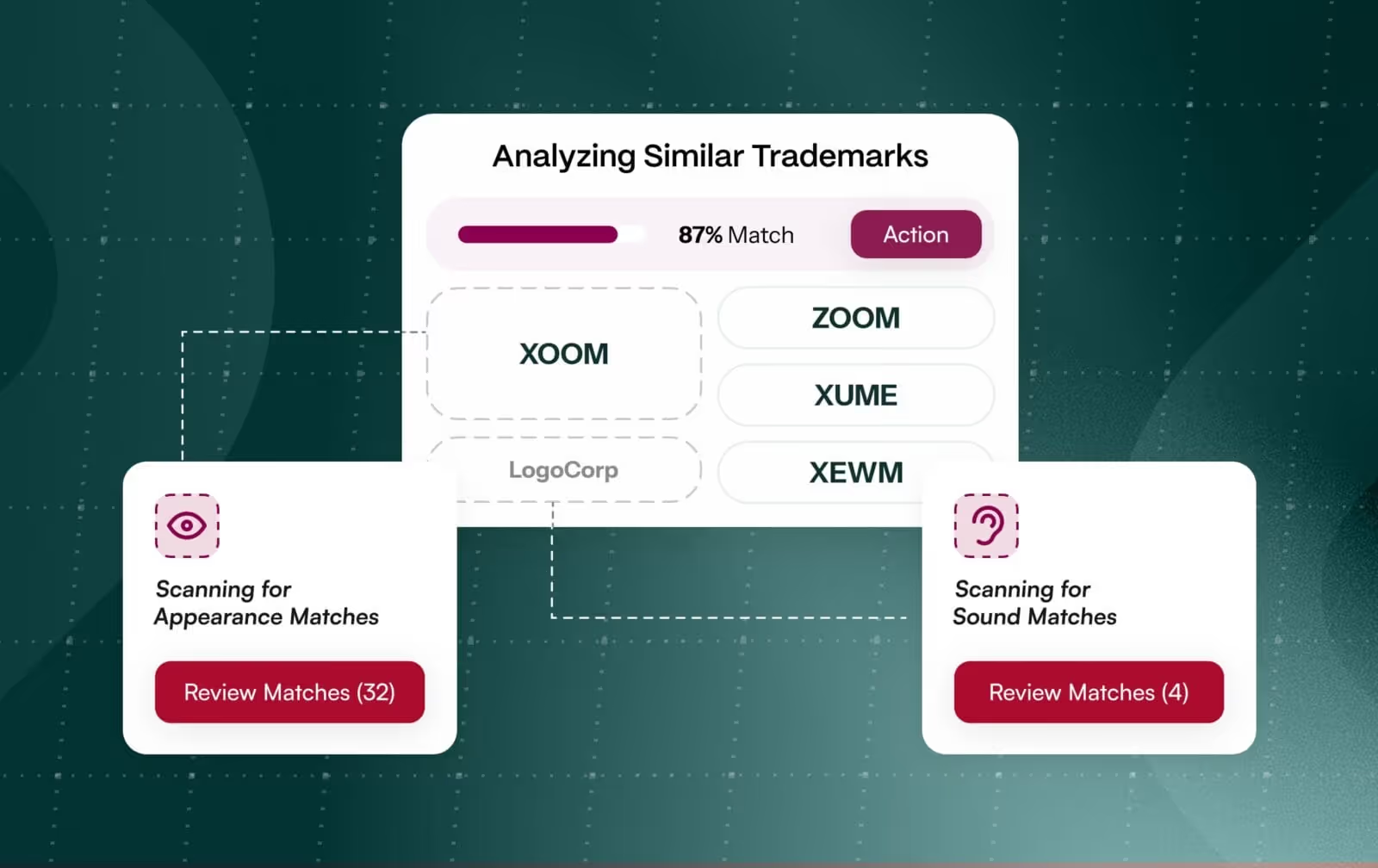
As brands expand across borders, navigating a web of diverse linguistic and legal systems, phonetic similarity is becoming an increasingly vital risk factor. That’s why we've built the first AI-driven trademark phonetics engine, a revolutionary tool that uses advanced natural language processing (NLP) and neural networks to identify marks with similar pronunciations —across languages and jurisdictions.
Let’s dive into why smart phonetic detection matters more than ever, and how it solves real-world problems for trademark professionals.
The hidden risks: What traditional trademark search tools miss
Despite advances in trademark search technology, traditional tools continue to pose significant challenges for trademark professionals, such as:
- Overlooking phonetic conflicts: The missed matches
Standard text-based trademark searches are limited to literal string matches. A mark like SYNTECH may fail to flag SINTEC or ZINTEK, despite them sounding remarkably similar. These missed conflicts can result in costly disputes or denied applications.
- Navigating complex languages and jurisdictions
Phonetic confusion is particularly risky in multi-lingual environments. What sounds harmless in one language may be dangerously close to an existing registered mark in another. Traditional tools lack jurisdiction-aware phonetic rules, forcing professionals to manually interpret soundalikes across various languages.
- The burden of manual reviews
Without smart phonetic filtering, IP teams must wade through long lists of irrelevant results—or worse, overlook a critical conflict. This slows down clearance timelines, increases the risk of human error, and places unnecessary strain on teams.
- Regulatory risks: When phonetic confusion becomes a safety issue
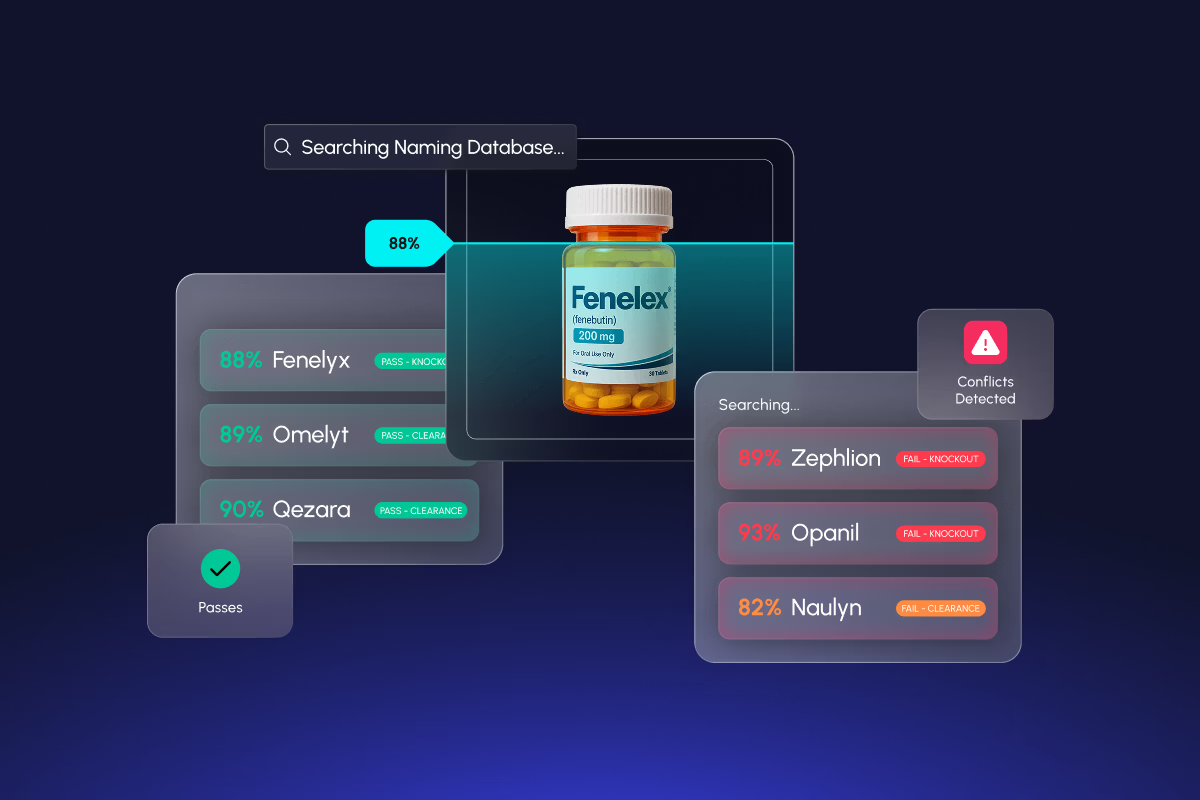
In industries like pharmaceuticals, soundalike drug names aren’t just a trademark concern, they’re a safety issue. Regulators like the FDA and EMA require rigorous phonetic checks to prevent confusion that could jeopardize patient safety. Traditional tools fail to address this critical need effectively.
Why smart phonetic search tools are essential for modern trademark processes
Phonetic similarity isn’t new, but the ability to handle it intelligently and at scale is. Our AI-powered engine brings a new standard to trademark search:
- Superior risk detection: Catching what others miss
By leveraging neural networks and NLP, our ExaMatch engine uncovers phonetically similar marks across languages, alphabets, and regional nuances. It reduces the risk of dangerous false negatives—those critical “missed” matches that traditional tools fail to detect.
- Cross-lingual precision: Global protection for local markets
Built with language-specific phonetic models, our tool understands how sounds differ between, say, French and Japanese. It ensures localized precision for international filing strategies—critical for global brands.
- Speeding up clearance: More results, less noise
Our ExaMatch engine doesn’t just return more results—it returns better ones. By surfacing only relevant phonetic matches and filtering out irrelevant ones, legal teams can move faster and make informed decisions without the clutter.
- Ensuring regulatory compliance: A safety net for high-stakes industries
In industries such as healthcare or finance, the cost of confusion is high. ExaMatch's smart phonetic detection helps meet stringent regulatory compliance standards by detecting potential conflicts early on, protecting companies from costly legal exposure. It’s more than a search tool; it’s a safeguard.
The takeaway: Why smart phonetic detection is a game-changer for trademark protection
Phonetic risks are no longer something trademark professionals can afford to overlook. As businesses expand globally and regulatory pressures increase, traditional search tools simply aren't equipped to catch the phonetic conflicts that could cause significant damage.
With AI-powered, jurisdiction-aware phonetic detection, ExaMatch offers trademark professionals the tools they need to clear and protect marks faster, smarter, and with fewer surprises.
Ready to experience the future of trademark searching? Get in touch to see ExaMatch Smart Phonetics in action.
See how PharmaCheck™ accelerates name qualification
From early-stage screening to post-clearance checks, we help you move faster with confidence — while avoiding missteps new, and help you move forward — faster.
Similar resources


ICANN 2026: Which New Domain Extensions Put Your Trademarks at Risk?
The IP Professional's Playbook: Strategic Naming for an AI-Driven Pharma Market in 2026
.avif)
The Definitive Guide to Intellectual Property Protection