






.svg)
.avif)









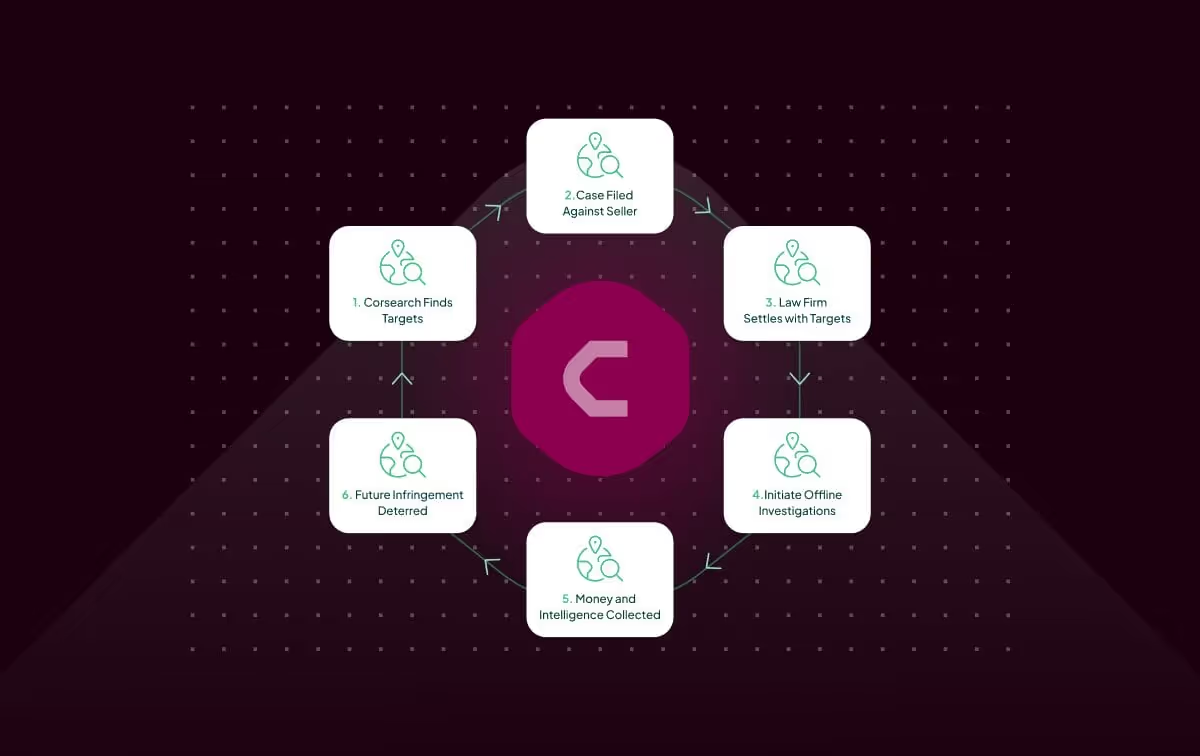
For brands facing an overwhelming volume of infringements on US e-commerce platforms, Schedule A Litigation has emerged as one of the most powerful tools to create a deterrent and to recover lost revenue from illicit sales.
Explore what Mike Sweeney (VP of Brand Protection) and Karl Florida (SVP of Revenue Recovery) outlined during a recent Corsearch webinar on Ecommerce Infringement on US Marketplaces:
What is Schedule A Litigation?
"Schedule A litigation is a mass-defendant lawsuit" explained Karl Florida, SVP of Revenue Recovery at Corsearch. It allows a brand to group dozens or hundreds of foreign infringing sellers into a single federal lawsuit in the US.
By securing Temporary Restraining Orders (TROs), brands can immediately freeze the infringers’' marketplace payment accounts.
The use of Schedule A Litigation has seen continued growth, as we’ve observed over 5,000 Schedule A cases have been filed in US district courts since 2018, with about 86% filed in a single district - the Northern District of Illinois.
When Is Schedule A Litigation Applicable?
Not every infringement warrants a lawsuit.
According to the framework discussed by Mike Sweeney, VP of Brand Protection at Corsearch, a brand has a strong case for Schedule A Litigation when they meet five specific criteria:
1. Strong IP registrations
The brand owner must have US-registered trademarks, copyrights, trade dress, or design patents.
2. Major US e-commerce marketplaces
The infringement is occurring on major e-commerce platforms with a presence in the US.
3.Infringement at scale:
The brand owner is facing dozens or hundreds of infringing sellers generating significant sales.
4. Foreign infringers:
The infringing sellers are based outside the US (often in jurisdictions like China), making traditional litigation and service of process difficult.
5. Clear Infringement:
The infringement must be unambiguous to be supported in court.
Sweeney highlighted the case of Viking Arm, a revolutionary hand tool. Counterfeiters tried to evade text-based detection by splitting the brand's registered wordmark into separate terms (i.e. placing other words between "Viking" and "Arm" in the product title).
While clever, this kind of clear, deliberate infringement is exactly what Schedule A is designed to combat.
Real Results: The Funwares Success Story
During the webinar, Corsearch highlighted the success of Funwares, an innovation-focused product company.
After launching highly successful items, Funwares was consistently met with a flood of counterfeit listings.
"We get copied on our products within months of launching them, unfortunately. Prior to using Corsearch... our lawyers would send strongly worded letters, which would get us almost nowhere."
Rob Kushner - President & Founder at Funwares
Trying to sue overseas companies individually was simply too expensive, with no way to get recovery.
By partnering with Corsearch, Funwares was able to identify foreign counterfeiters at scale and group them into Schedule A lawsuits in preferred jurisdictions. The impact was immediate.
"The first thing that happens is all of the counterfeit listings are frozen" Rob Kushner shared, "So the benefit immediately is a lift in our general sales because the counterfeits are down."
To date, Funwares has filed six separate Schedule A lawsuits and collected hundreds of thousands of dollars of revenue they thought was lost to infringers.
By adding litigation to their Brand Protection strategy, they achieved consistent and measurable revenue recovery. This proves that with the right tools, brands can recover lost revenue at the same time as they protect their brands by deterring future infringement.
Speak to Corsearch today to find out how we protect the world’s most valuable brands.
See how PharmaCheck™ accelerates name qualification
From early-stage screening to post-clearance checks, we help you move faster with confidence — while avoiding missteps new, and help you move forward — faster.