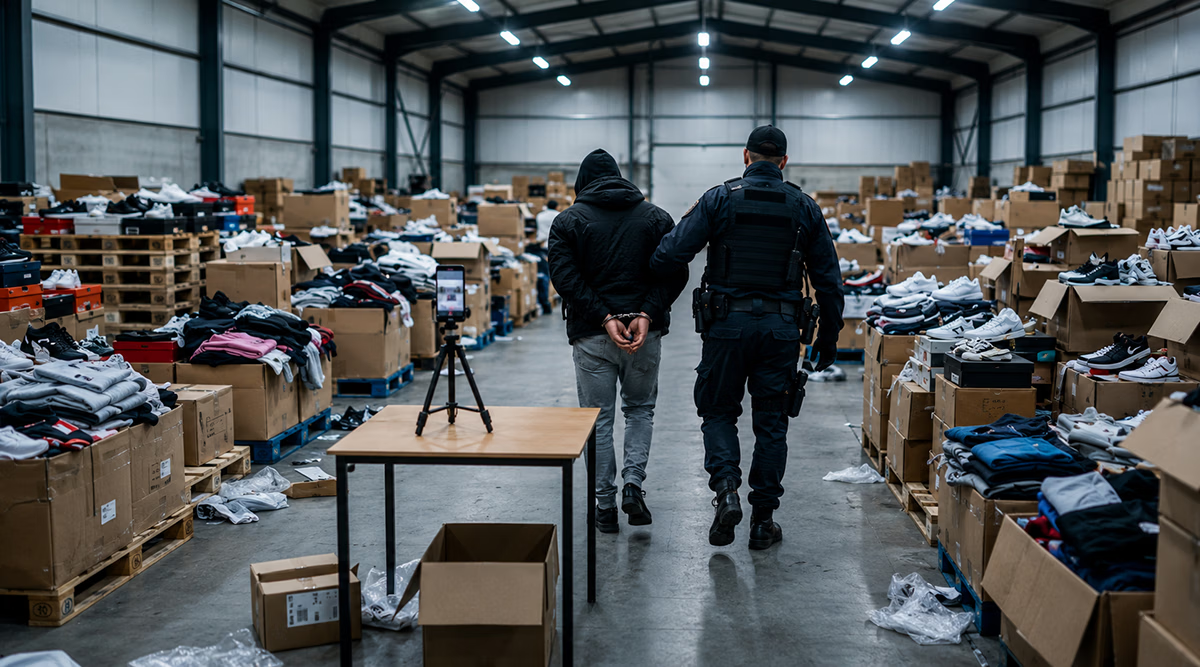














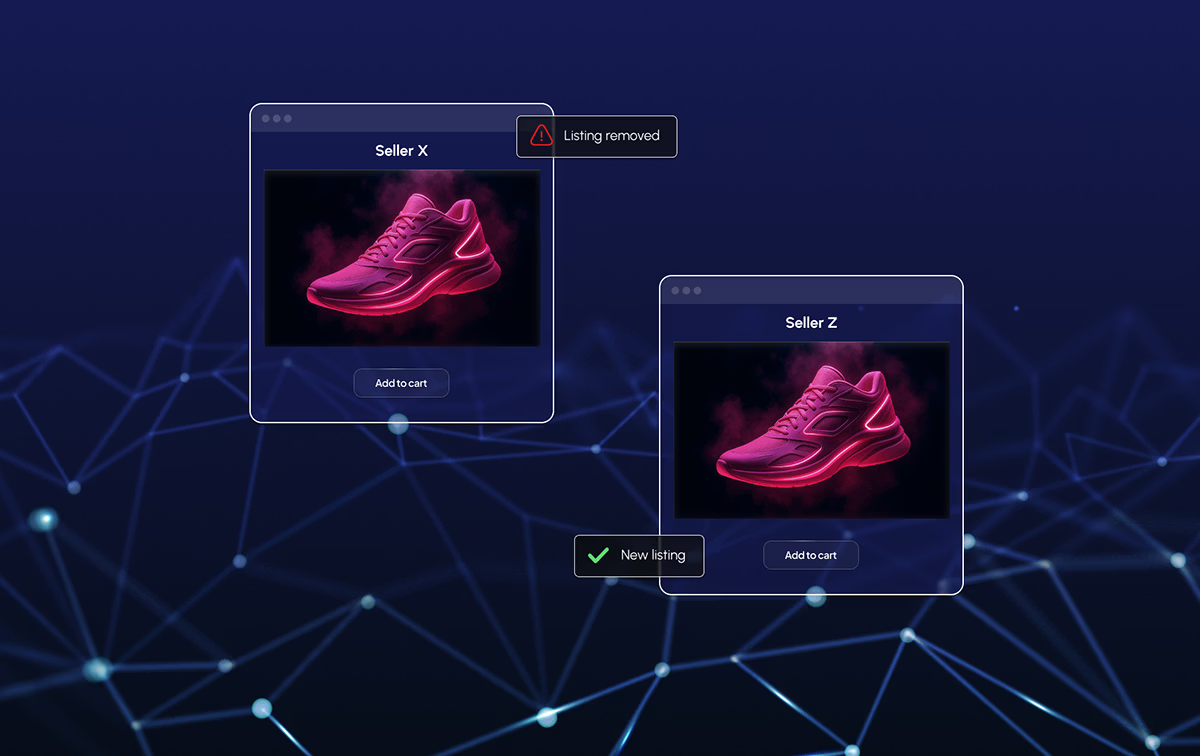



A counterfeit product disappears from an online marketplace - the listing is removed, the seller account is suspended and the infringement is recorded as resolved.
But what happens when the same products appear under another seller name, on a different platform or through a private messaging channel?
For IP professionals, removing visible infringement is no longer the final goal; it is often just the beginning of the challenge.. The people and infrastructure responsible may remain active, allowing the operation to continue.
It’s not enough simply to focus on where counterfeit products are being sold. Brand Protection teams must determine who is behind those sales, how their operations are connected and what it takes to stop repeat infringement.
As counterfeit networks exploit the connections between marketplaces, social media and global supply chains, brands need greater visibility into the operations behind individual listings.
Counterfeit networks extend beyond individual marketplaces
Online counterfeiting is a substantial international problem.
The OECD and EUIPO' estimate that counterfeit goods accounted for approximately $467 billion in global trade in 2021, equivalent to 2.3% of global imports.
The report highlights how expanding ecommerce, complex supply chains and international logistics create opportunities for counterfeit goods to enter legitimate trade.
For Brand Protection teams, the challenge is compounded by the different roles digital channels can play.
An online marketplace may provide a storefront. Social media can generate interest and attract potential buyers. An independent website may facilitate transactions, while messaging applications can support direct communication between sellers and customers.
These activities do not necessarily take place under the same name or account.
A consumer might first encounter a product through social media advertising, follow a link to another website and complete a purchase through a separate channel.
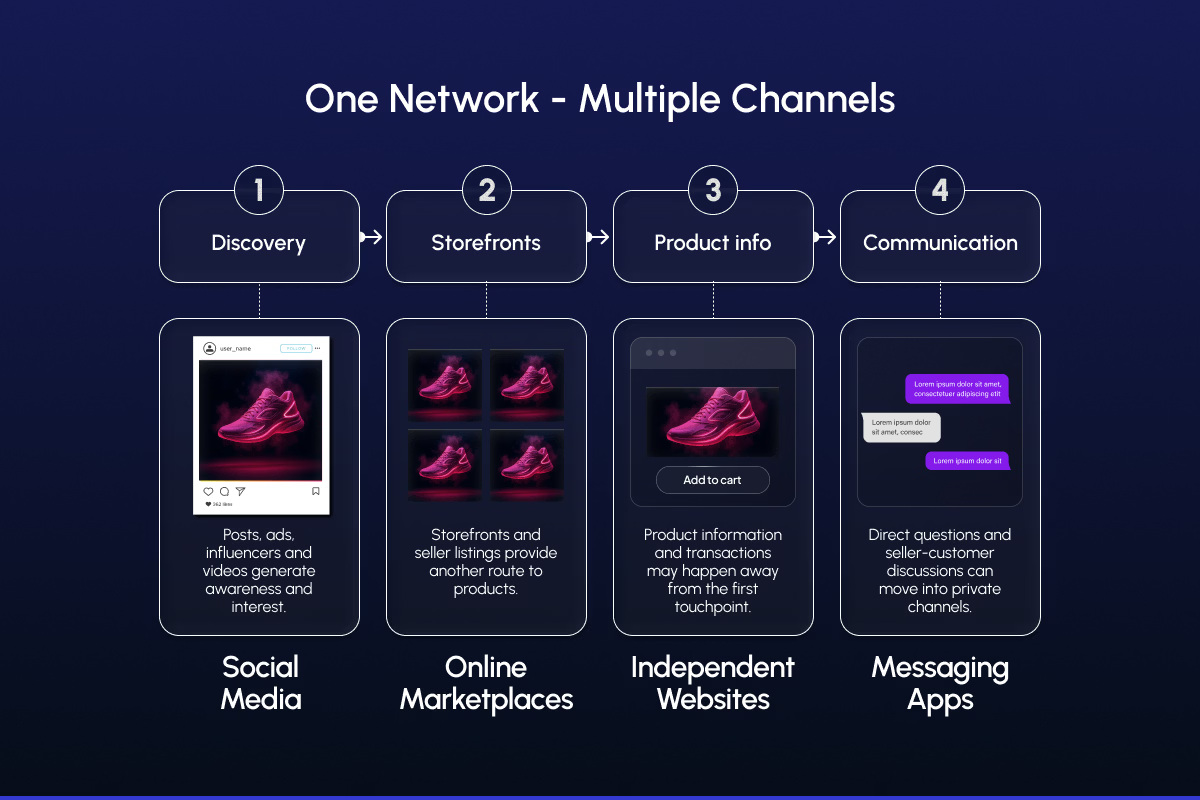
The European Union Intellectual Property Office and Europol have previously documented counterfeit products being promoted through social media advertising, livestreaming, videos and instant messaging services.
This creates a significant challenge for enforcement teams monitoring platforms individually.
When discovery, communication, payment and fulfillment occur across different channels, identifying one counterfeit listing may reveal only a small part of the operation.
How counterfeit sellers avoid detection
Counterfeit sellers can use different tactics to conceal their activities, complicate enforcement and maintain access to potential customers.
Not every operation uses the same methods. However, several approaches illustrate why identifying the people behind online counterfeiting can be more difficult than identifying the products themselves.
Multiple storefronts and changing identities
A seller may operate several accounts or storefronts, creating alternative routes to customers if one is suspended.
When a platform removes an account, the same underlying operation may attempt to return under a different identity.
For brands, this can create a cycle of detecting, reporting and removing listings without necessarily preventing further infringement.
Misleading product descriptions and imagery
Some sellers avoid obvious Trademark references or use alternative descriptions to make counterfeit products harder to identify through conventional searches.
Images may also be selected or altered to obscure the nature of the goods being offered.
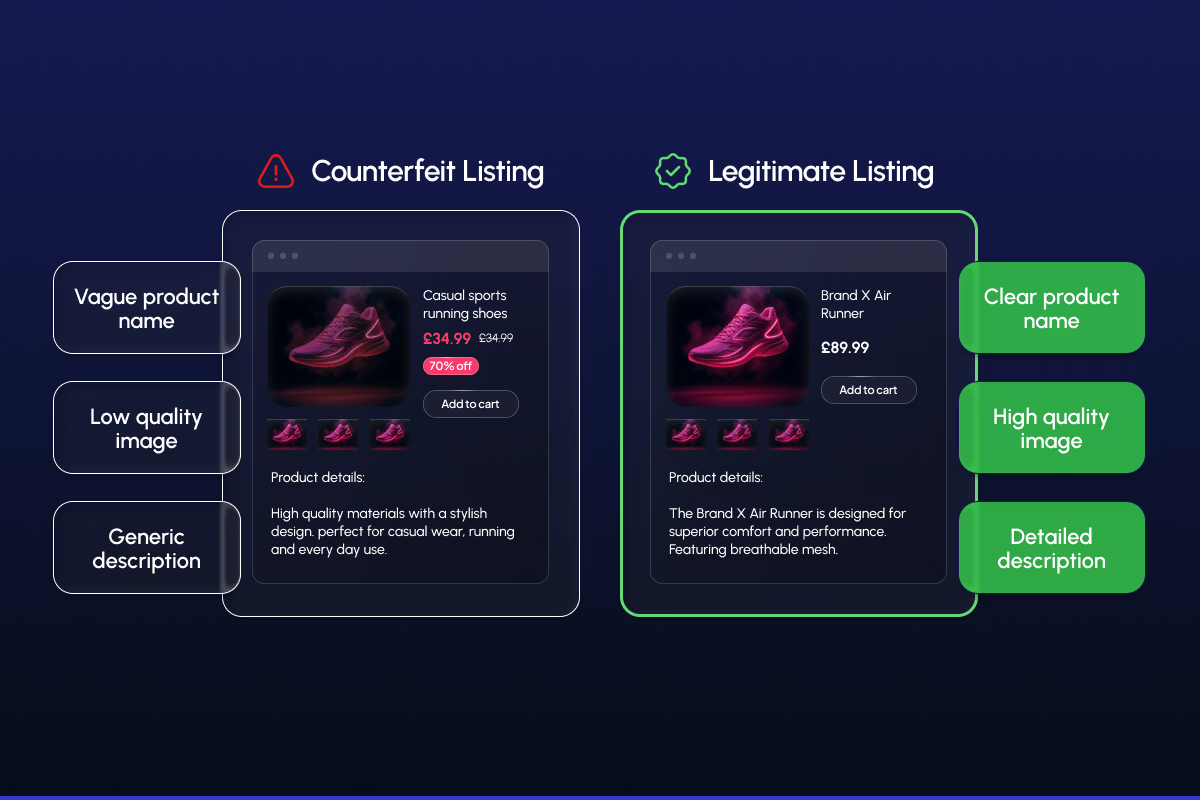
This creates difficulties for monitoring strategies that depend heavily on recognizable brand names, product descriptions or visual matches.
Moving conversations into private channels
Social media can act as a point of discovery rather than the final sales destination.
A public post may direct interested buyers toward private conversations, where further product information or transaction arrangements are discussed.
The challenge for Brand Protection teams is that publicly visible activity may not reveal the full commercial relationship.
Separating sales from supply
The seller advertising a counterfeit product may not manufacture, store or distribute it.
Intermediaries, fulfillment providers and international suppliers can create additional layers between the consumer-facing account and the source of the goods.
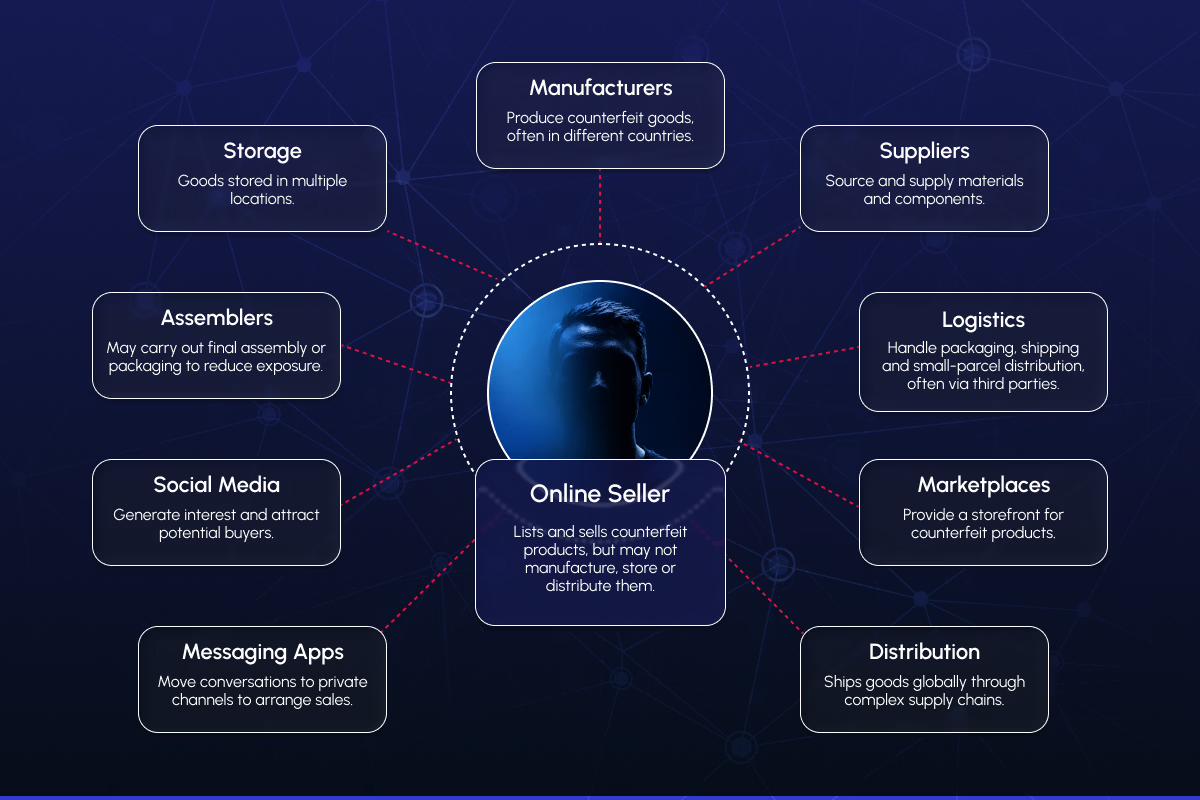
The OECD and EUIPO's 2025 research highlights how international supply chains, localized assembly and small-parcel distribution complicate enforcement.
Together, these practices demonstrate why a seller account should not automatically be treated as a complete representation of the business behind it.
Why counterfeit sellers can reappear after takedowns
Takedowns remain an essential component of online Brand Protection.
Removing counterfeit listings can reduce immediate consumer exposure, prevent further sales through the affected channel and support the enforcement of intellectual property rights.
But the removal of a listing does not necessarily remove the operator, stock, supplier relationships or alternative sales channels.
A counterfeit seller may continue operating elsewhere, while another account connected to the same operation remains active.
This distinction changes how you prove your value to the business.
A high volume of successful takedowns demonstrates activity, but activity metrics alone rarely translate in the boardroom. Leadership needs to know whether the underlying counterfeit operation has been genuinely disrupted.
Brands also need to understand whether repeat offenders are returning, whether connected accounts remain active and whether enforcement is reducing the persistence of infringement.
Takedowns shouldn’t necessarily be abandoned. They must become part of a broader strategy that addresses both immediate exposure and the causes of repeated infringement.
The hidden connections behind counterfeit networks
Two counterfeit listings may appear unrelated at first glance.
They may use different seller names, storefront designs and product descriptions. Yet closer investigation could reveal shared contact details, digital infrastructure, supplier relationships or fulfillment arrangements.
Identifying these connections changes the nature of the investigation.
Instead of treating every listing as an isolated problem, Brand Protection teams can begin to understand whether several accounts form part of a coordinated operation.
That understanding can help establish which sellers are repeat offenders, which activities are connected and where enforcement may have the greatest impact.
However, identifying a shared characteristic is not the same as proving common ownership.
Two sellers may use the same service provider without being part of the same counterfeit network. Effective investigations must distinguish genuine operational relationships from coincidental similarities.
This is why evidence collection, verification and investigative judgment are essential.
The value of network analysis lies not simply in finding connections, but in establishing which connections are meaningful and actionable.
How intelligence-led investigations uncover counterfeit operations
Identifying connected counterfeit sellers requires a combination of monitoring, investigation and evidence-based analysis.
- Open-source intelligence, commonly known as OSINT, can help investigators examine publicly available information across websites, marketplaces, company records and other accessible sources.
- Human intelligence, or HUMINT, can contribute additional context through appropriately conducted inquiries and information obtained from human sources.
- Network analysis helps investigators examine relationships between accounts, infrastructure, contact information and other indicators.
When combined with verified evidence, these methods can help brands move beyond the immediate infringement to understand the wider operation.
The distinction is commercially important.
Knowing that a counterfeit listing exists allows a brand to request its removal. Understanding the operation behind that listing may support a more targeted enforcement strategy.
That could involve prioritizing repeat offenders, coordinating action across platforms, identifying upstream suppliers or preparing evidence for appropriate legal and enforcement processes.
Investigations therefore complement ongoing monitoring and takedowns rather than replacing them.
From repeated takedowns to sustained disruption
An effective Brand Protection strategy needs to operate at more than one level.
Detection identifies potential infringements. Enforcement addresses the immediate threat. Investigations help establish the relationships and infrastructure that allow counterfeiting to persist.
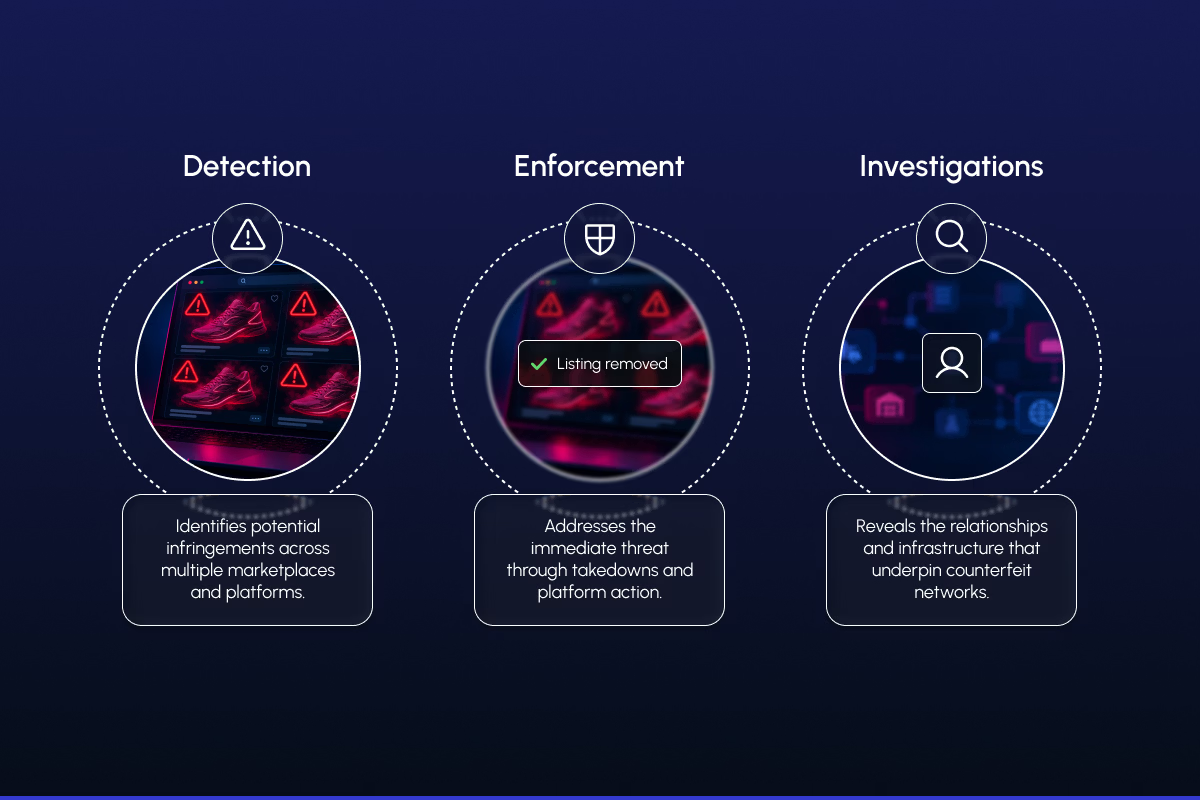
Together, these activities can support a shift from repeated reactive action toward more sustained disruption.
This approach also changes how success should be evaluated.
Alongside takedown volumes, brands can examine:
- Repeat offender activity
- The persistence of connected seller networks
- The effectiveness of coordinated enforcement and whether previously identified operations continue to reappear
For organizations managing infringement across multiple markets and platforms, these insights can support better decisions about where investigative resources should be concentrated.
To support this strategy, Corsearch Investigations 360 gives IP teams the visibility to uncover connected counterfeit networks and identify repeat offenders, empowering you to direct intelligence-led enforcement with confidence.
The wider principle is clear: effective protection requires visibility beyond the listing itself.
Protecting brands means understanding the operation behind the infringement
Counterfeit networks can exploit the gaps between platforms, identities and supply chains.
A seller account may disappear while the products, operators and distribution relationships behind it remain in place.
For brands, this means that enforcement cannot be measured solely by what has been removed. It must also focus on the important question of whether the operation responsible has become harder to sustain.
Because removing a counterfeit listing only addresses what consumers can see. Understanding the network behind it helps you know what matters and act on what counts, giving you a stronger basis for addressing what keeps counterfeiting alive.
Uncover the networks behind online counterfeiting
Discover how Corsearch Investigations 360 helps brands identify connected counterfeit sellers, investigate repeat offenders and support more targeted enforcement.
Speak to a Corsearch expert about strengthening your Brand Protection investigations.
FAQ
How do counterfeit sellers avoid detection?
Counterfeit sellers use a variety of methods, which can include multiple seller accounts, alternative product descriptions, changing identities and movement between public storefronts and private communication channels.
Why do counterfeit sellers reappear after takedowns?
A takedown removes a specific infringement or account but may leave the underlying operator, inventory, supplier relationships and alternative sales channels unaffected.
How can brands identify connected counterfeit sellers?
Investigators can analyze verified links between seller accounts, contact information, infrastructure, suppliers and fulfillment arrangements using OSINT, appropriate HUMINT and network analysis.
Why are takedowns alone insufficient to stop counterfeiting?
Takedowns address visible infringement. Persistent operations may require coordinated investigations and enforcement against repeat offenders and supporting infrastructure.
See how PharmaCheck™ accelerates name qualification
From early-stage screening to post-clearance checks, we help you move faster with confidence — while avoiding missteps new, and help you move forward — faster.
Similar resources



Beyond the Price Tag: The Hidden Hazards of Counterfeit Auto Parts

What Is The Gray Market and How Does it Work?

Following the Money: How Corsearch Dismantles Counterfeit Networks at the Source