







.svg)
.avif)





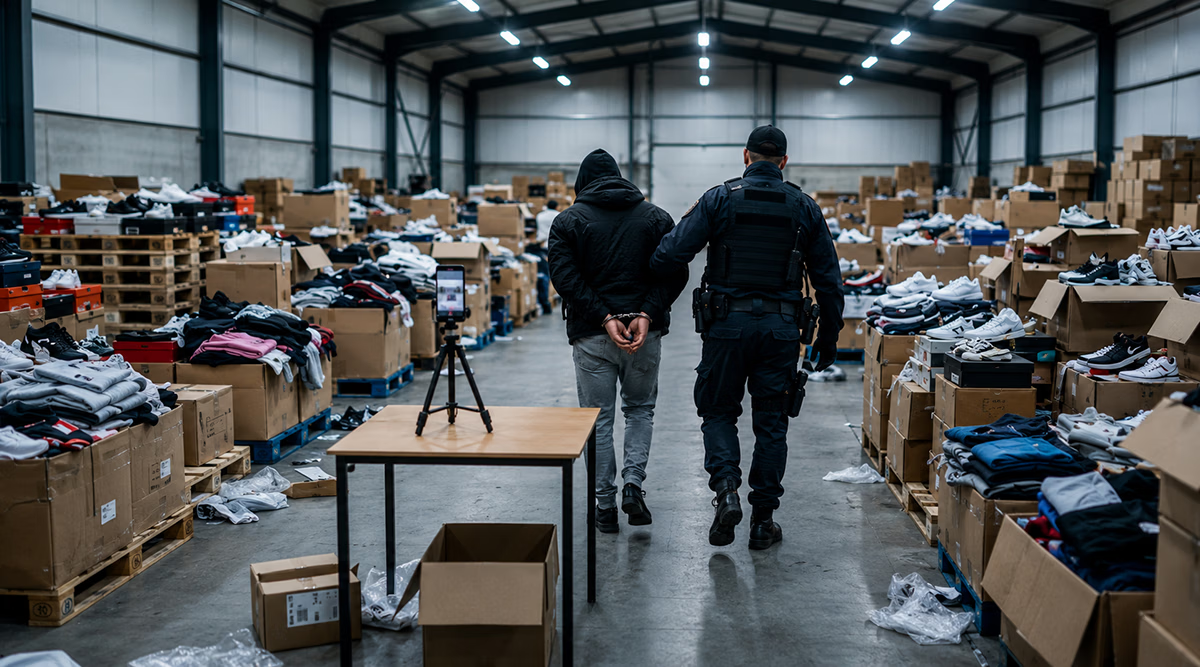



Scroll through LinkedIn after a successful enforcement action and you'll often see the same image: rows of counterfeit goods stacked on warehouse floors, machinery seized, authorities standing alongside confiscated products.
It's a powerful visual. But it tells only the final chapter of the story.
Long before authorities arrive on site, investigators have spent weeks - and often months - piecing together intelligence that transforms a single suspicious listing into a coordinated enforcement action. Every marketplace listing analyzed, every covert conversation, every test purchase, every shipping record and every financial lead contributes to a much bigger picture.
For rights holders, this distinction matters.
Counterfeit operations have evolved far beyond individual sellers listing products on online marketplaces.
Today's networks span multiple digital channels, shell companies, logistics providers, warehouses and manufacturers across several jurisdictions. Removing a listing may address the immediate symptom, but dismantling the operation requires understanding the network behind it.
Successful enforcement doesn't begin with a raid. It begins with intelligence.
.avif)
Counterfeit Networks Are Built to Stay Hidden
One of the biggest misconceptions surrounding counterfeiting is that investigators are pursuing individual sellers.
In reality, experienced counterfeiters rarely operate through a single account or marketplace. They deliberately build resilient networks designed to survive enforcement.
A single operation may control multiple marketplace storefronts, advertise through social media, communicate with buyers via encrypted messaging platforms, process payments through different financial entities and fulfill orders from warehouses operating under entirely separate company names.
Each component appears independent. But together, they form a sophisticated commercial operation.
This is why taking down one listing rarely changes the bigger picture. Another account appears. A new seller name emerges. The products continue to move.
The real objective isn't identifying one seller. It's identifying everyone connected to that seller.
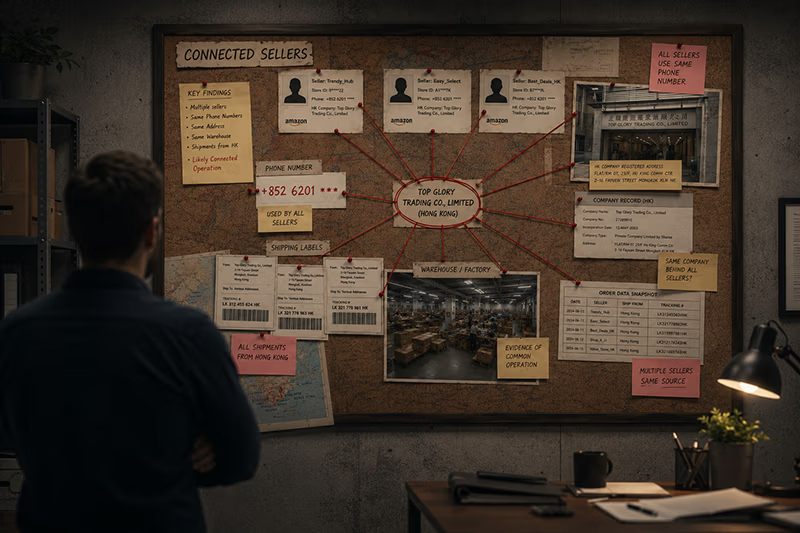
Every Investigation Starts with a Single Digital Clue
Almost every offline enforcement action begins online.
It might be an unusually high-volume marketplace seller. A social media account advertising counterfeit luxury goods. A business-to-business wholesaler offering branded products at impossible prices. Or several seemingly unrelated storefronts using identical product photography.
Individually, these signals reveal very little. Collectively, they begin to expose patterns.
Investigators analyse marketplace activity, historic listings, payment methods, domain registrations, seller behavior and digital infrastructure to understand whether an account represents an isolated infringer or something much larger.
Increasingly, the answer is the latter. What appears to be several independent sellers often proves to be one organization operating multiple storefronts to reduce risk and increase resilience. This intelligence determines whether a target is simply another online seller - or the visible edge of a much larger network.

Intelligence Doesn't Stop at the Screen
Digital intelligence provides direction and offline intelligence provides proof.
Once investigators identify a priority target, the investigation shifts into a different phase.
Rather than immediately pursuing enforcement, investigators begin validating assumptions through carefully planned engagement.
Test Purchases
Test purchases become one of the most valuable investigative tools available.
They confirm product authenticity, establish documented evidence of infringement and, more importantly, create opportunities to gather intelligence that simply isn't available through open-source research.
- A conversation about shipping can reveal a warehouse location
- A request to exchange goods may uncover the genuine returns address rather than the fulfillment centre printed on a shipping label
- A payment request can expose financial entities linked to multiple storefronts
Every interaction is designed to answer another question. Not "can we buy the counterfeit product?" but "who is actually behind this operation?".
Following the Money Often Leads Somewhere Unexpected
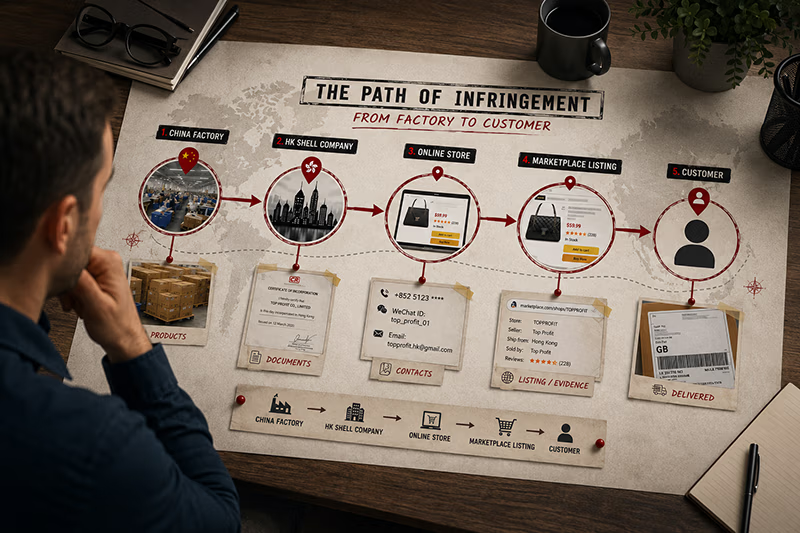
One of the most revealing moments in an investigation isn't finding a warehouse. It's finding a company. Particularly, one registered in Hong Kong.
For many sophisticated counterfeit networks, Hong Kong serves as far more than a mailing address. Its legal framework, financial infrastructure and position as an international logistics hub make it an attractive gateway between mainland Chinese manufacturing and global commerce.
The Hong Kong problem
Rather than exporting directly from manufacturing entities, networks frequently establish Hong Kong companies to manage payments, logistics and international transactions while distancing factory operations from overseas buyers.
To an outside observer, the Hong Kong entity appears to be the business. To investigators, it's often the beginning of the investigation.
Registry records, including corporate incorporation documents and beneficial ownership information, can reveal directors, residential addresses and corporate relationships that link seemingly independent businesses together. Combined with shipping records, payment intelligence and marketplace data, these connections can ultimately lead investigators back to manufacturing facilities operating in mainland China.
What initially appears to be one online seller becomes an interconnected network of companies, warehouses and suppliers operating across multiple jurisdictions. T
The counterfeit listing wasn't the operation. It was simply the entry point.
Did you know?
Hong Kong entities are frequently used as financial and logistics intermediaries between manufacturing operations and international marketplaces, making corporate registry records an important investigative resource.
Building the Evidence Authorities Need
Perhaps the biggest misconception surrounding enforcement is that authorities simply respond to reports of counterfeit products. In reality, enforcement agencies require far more than suspicion.
Investigators must present evidence that clearly identifies the infringing parties, demonstrates the scale of activity and establishes links between online behaviour and physical operations.
Depending on the jurisdiction, this may include:
- Transaction records
- Communications
- Verified identities
- Warehouse locations
- Financial intelligence
- Product authentication
- Evidence of organised commercial activity
Authorities also apply different legal thresholds before administrative or criminal action can proceed.
Every conversation, payment, shipment and document contributes to an evidence package designed to answer the questions authorities will ask before committing operational resources.
Only when those thresholds are met does enforcement become possible.
%20REVISED.avif)
A Raid Is Never the Beginning
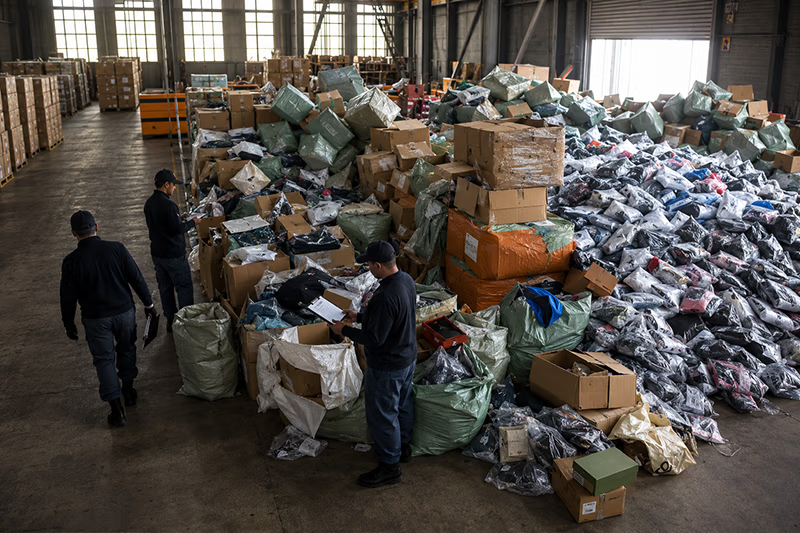
When authorities eventually enter a warehouse, the investigation has already succeeded.
The location has been identified. The network has been mapped. The financial links have been established. The evidence has been verified.
The raid is simply the operational execution of months of investigative work. However, in many cases this isn’t the end.
Warehouse records, financial documents, production equipment, customer databases and logistics information frequently generate new intelligence that leads investigators to additional manufacturers, distributors and sellers.
One successful enforcement action often becomes the starting point for the next investigation.
Intelligence Is What Makes Enforcement Possible
The image of seized counterfeit goods may be the most visible outcome of Brand Protection, but it represents only a fraction of the work involved.
Behind every successful raid are months of digital intelligence, offline investigations, cross-border collaboration and evidence gathering. The objective is not simply to remove counterfeit products from the market, but to understand the networks enabling them and provide authorities with the intelligence required to take meaningful action.
As counterfeit operations become increasingly sophisticated, organisations that rely solely on reactive enforcement will always remain one step behind.
The brands making the greatest impact are those investing in intelligence first. Because successful enforcement doesn't begin when authorities intervene. It begins the moment investigators start asking the right questions.
The seizure may make the headlines. The intelligence behind it doesn't.
With investigations spanning 119 countries, Corsearch helps brands uncover hidden networks, identify key operators and build evidence that drives enforcement.
Learn more about Corsearch Investigations and how we help brands turn intelligence into action.
See how PharmaCheck™ accelerates name qualification
From early-stage screening to post-clearance checks, we help you move faster with confidence — while avoiding missteps new, and help you move forward — faster.
Similar resources



Beyond the Price Tag: The Hidden Hazards of Counterfeit Auto Parts

What Is The Gray Market and How Does it Work?