






.svg)
.avif)









Table of contents:
• What is a US Trademark Search?
• Why is a US Trademark Search important?
• Types of US trademarks
• The US Trademark Search process
• US trademark classes
• The role of trademark attorneys
• Common challenges
• Common law
• Next steps
What is a US Trademark Search?
A US trademark search is the process of investigating existing trademarks to ensure that a new trademark is unique and does not infringe on the rights of others. This involves examining the USPTO database, state trademark databases, and even unregistered (or common law) trademarks. A comprehensive search is critical before filing a trademark application to avoid potential legal disputes and the rejection of your application.
Why is a US Trademark Search important?
Conducting a trademark search before filing is essential for several reasons:
- Avoiding infringement: Ensures your trademark does not infringe on existing trademarks, which could result in costly legal disputes or the need to rebrand.
- Application success: Increases the likelihood of your trademark application being approved by identifying potential conflicts early.
- Brand protection: Helps protect your brand by confirming that your trademark is unique and can be legally defended against imitators.
The US Trademark Search process
1. Search the USPTO database
The first step in any US trademark search is to examine the USPTO’s online database. This database contains all federally registered trademarks and pending applications. A search typically involves:
- Exact matches: Searching for trademarks that are identical to your proposed mark.
- Similar marks: Identifying trademarks that are similar in appearance, sound, meaning, or commercial impression.
- Class of goods/services: Ensuring the search covers the appropriate class or classes related to your products or services.
2. Check state trademark databases
In addition to the USPTO database, it’s important to search individual state trademark databases. Trademarks registered at the state level may not appear in the federal database but can still prevent the use of a similar mark within that state. Each state has its own registry and search tools.
3. Conduct a common law search
Common law trademarks are not registered with the USPTO or state authorities but are protected based on their use in commerce. These can be challenging to find since they aren’t listed in official databases. To conduct a thorough common law search:
- Review business directories: Search through online business directories, local trade names, and business listings.
- Check domain names: Investigate existing domain names to see if they correspond to your proposed trademark.
- Search social media: Explore social media platforms for unregistered but widely recognized trademarks.
4. Consider international trademarks
If your business has plans to operate internationally, it’s wise to consider potential conflicts with trademarks registered in other countries, particularly if those marks are well-known in the US or could impact your brand’s global presence.
US trademark classes
Trademarks in the US are categorized into 45 different classes, which represent different types of goods and services:
- 34 classes for goods (Classes 1-34)
- 11 classes for services (Classes 35-45)
Understanding the class your trademark falls into is vital, as it affects the scope of your protection and the areas you need to search. When you register a trademark, you must specify the class or classes that correspond to the products or services your mark will cover. For example, a trademark in the class for clothing (Class 25) would only need to be searched for conflicts within that class unless it has a broad reputation.
Multiple classes and filing considerations
It is possible to register a trademark in multiple classes if your goods or services span across different categories. However, remember that each additional class adds to the cost of filing and maintaining your trademark. Here are some key considerations:
- Filing fees: The USPTO charges a separate fee for each class you include in your application.
- Use requirements: For each class, you must demonstrate that you are using the trademark in commerce (or have genuine intent to use it) for the goods or services listed.
- Specimens: When filing a trademark application, you must provide a specimen (a real-world example) showing the trademark in use for each class of goods or services.

Common misconceptions about trademark classes
- One class = total protection: Registering in a single class only protects your trademark within that specific category. If your business operates in multiple sectors, you may need to register in several classes.
- Class similarities: Trademarks in different classes can still conflict if they are considered similar in nature or if consumers are likely to be confused about the source of the goods or services. This is particularly true for classes that often overlap, such as Classes 9 (software) and 42 (IT services).
- International registration: US trademark classes align with international standards, but other countries may have different rules or interpretations. If you plan to expand internationally, it’s essential to research the trademark class systems in those jurisdictions.

The role of trademark attorneys
While it is possible to conduct a US trademark search on your own, the process can be complex and nuanced. Hiring a trademark attorney can provide several benefits:
- Expertise: Attorneys understand the nuances of trademark law and can help navigate the complexities of the search process.
- Comprehensive search: Attorneys can access additional resources and databases, increasing the thoroughness of your search.
- Legal advice: Attorneys can provide guidance on potential risks and the likelihood of successful trademark registration.
What happens after the search?
Once your trademark search is complete, and no significant conflicts are found, you can proceed with filing your trademark application with the USPTO. If conflicts are identified, you may need to consider modifying your trademark, selecting a different mark, or conducting further research.
Common law trademarks and their impact
It’s essential to recognize that even if your search of the USPTO and state databases returns no conflicts, common law trademarks can still present challenges. A business with prior use of a similar mark, even if unregistered, could oppose your application or bring legal action. That's why understanding the scope of common law rights and how they impact your trademark search is critical.
Learn more about common law trademarks >
Next steps
Conducting a thorough trademark search is a crucial step in securing and protecting your brand in the United States. By understanding the types of trademarks, navigating the USPTO and other relevant databases, and addressing potential challenges, you can significantly increase the likelihood of successful trademark registration and avoid costly legal disputes. Whether you're a startup or an established business, taking the time to perform a detailed trademark search will pay off in the long run.
At Corsearch, we offer comprehensive trademark search and protection services tailored specifically for the US market. Our extensive access to the USPTO database, along with advanced AI-driven tools, ensures precise and thorough search results.
Our team of US trademark experts provides in-depth analysis and interpretation, delivering detailed reports that cover all relevant databases. We also offer continuous monitoring services to keep you informed about new trademark filings and potential conflicts within the United States.
With solutions designed for businesses of all sizes, Corsearch ensures your brand is well-protected and legally compliant, giving you confidence in your US trademark registration process.
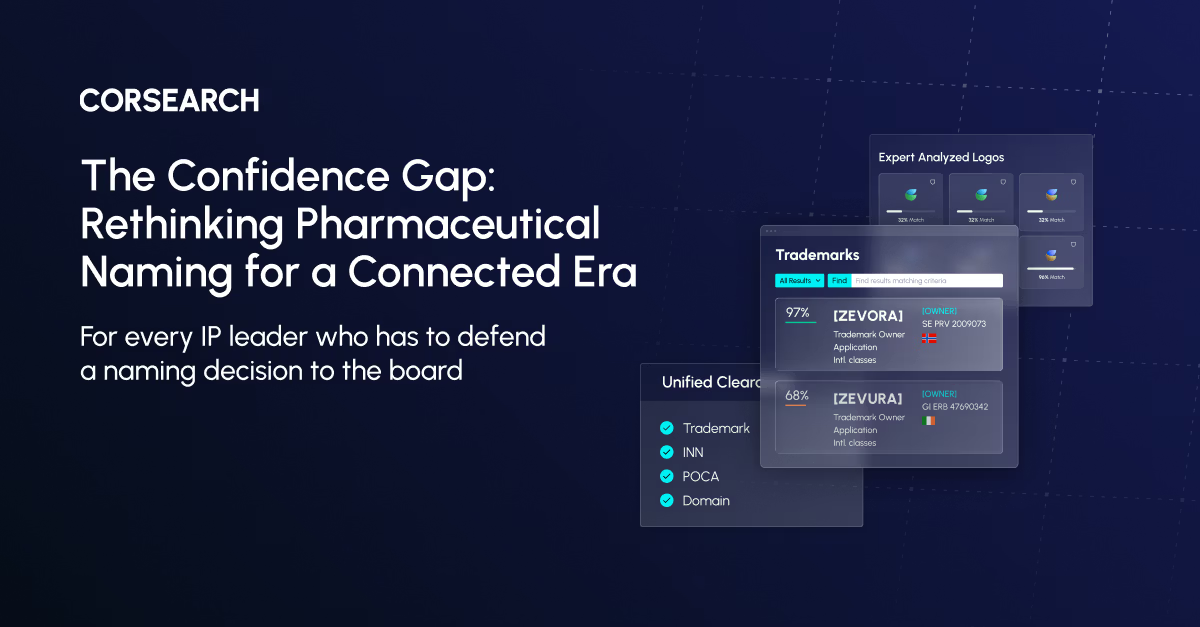
See how PharmaCheck™ accelerates name qualification
From early-stage screening to post-clearance checks, we help you move faster with confidence — while avoiding missteps new, and help you move forward — faster.


.avif)