






.svg)
.avif)





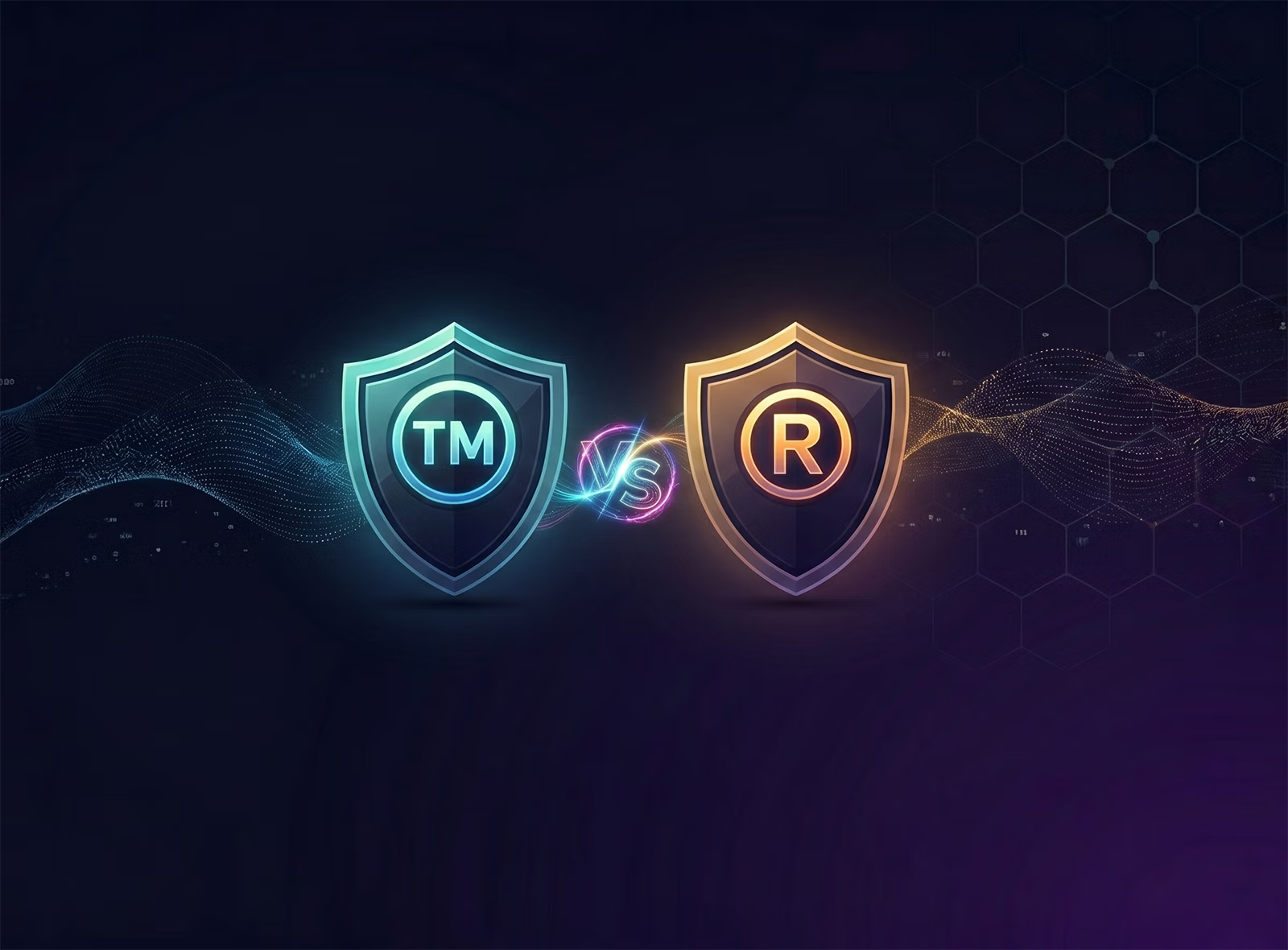



Confusion around various elements of Trademarks abound. Queries such as whether you can use a particular mark and whether you need to file an application to register a Trademark are common. One area of confusion lies around the TM (™) and R (®) symbols, what they represent, and why and when you should use them.
What’s the Difference Between TM and R?
As always, there are regional differences in legislation and practice on which specific advice should be sought.
However, there are some generalities across most regions which can provide some basic information.
What does the TM (™) symbol mean?
The TM symbol can generally be used by any person or business to indicate that a particular word, phrase, or logo is intended to serve as an identifier for the source of that product or service. You do not have to have registered a Trademark to use it and many companies will opt to use the TM symbol for new goods or services in advance of and during the application process.
What does the R (®) symbol mean?
The R symbol indicates that this word, phrase, or logo is a registered Trademark for the product or service. It must only be used in the case of registered Trademarks and by the owner or licensee. It also must only be used in the regions in which you possess a valid Trademark registration.
Why Does it Matter?
We have said it before but it is worth saying again - the area of Trademark law is an immensely complex one with little things that you do or don’t do having a critical impact if things go wrong - and they do with appalling regularity.
It is without doubt worth a small investment to discuss your particular circumstances with a Trademark attorney. The below should not be treated as an exhaustive list of considerations but rather as a small group of illustrations as to why that advice may be required.
You may see many discussions online which lean towards the thinking that the use of such symbols is irrelevant (and indeed the registration of a Trademark at all). Some claim this has no impact on the level of protection you enjoy. Perhaps that is true in some regions but not in all.
In the first instance, where you are using a word, phrase, or logo as a trademark intending it to identify you or your company as the source of products or services, you have the option in many countries to do this without applying to register a Trademark - this is known as ‘common law’ use.
In ‘common law’ regions, you do absolutely enjoy some protections but those are not equal to the protections that you would enjoy as the owner of a registered Trademark.
The use of the TM symbol in cases where you don’t wish to or cannot obtain a registration can be a strategic decision. For example, where your mark or brand is not registrable due to descriptiveness, consistent use of the brand can eventually lead you to acquire distinctiveness which might permit registration. In this case, using the TM symbol alongside the brand over a period of time potentially allows you to illustrate that you have been using this brand as a Trademark over an extended period of time - and that it has become recognizable in the marketplace as serving as a distinct identifier for your business.
Use of the TM symbol in the case of unregistered marks can also signify to the public at large (and potential infringers) that you have the legalities of protecting your brand in mind. This may act, in some cases, as a deterrent to infringement.
It should also be noted that in the creation of a brand, you are creating an intangible but material asset of your company. For potential investors, this can be a critical factor in the decision making process.
While an unregistered brand name may have some value, it is not comparable with the asset potential of a registered brand.
Why is There So Much Variation in How Different Companies Use the Different Trademark Symbols?
There is no single right or wrong approach - there are myriad considerations to bear in mind when making the choice to use an appropriate symbol or not, or to use it selectively in various ways through different channels and media.
Some of these considerations have legal implications and others will form part of your marketing or branding strategy. What works best for your brand and what legal requirements your region may demand will need specific expert advice but the below points will hopefully provide you with some food for thought!
One confusing use case of symbols is that very large companies, such as Google, own many registered Trademarks but do not use the symbols to which they are entitled. Or, in other cases, they will use symbols in some cases or channels but not in others. There are restrictions on use in regions without valid registration. This can cause issues for very large corporations whose products may be available in regions in which they do not have a valid trademark registration.
In these cases, companies may elect not to use symbols alongside their Trademarks.
In some cases and regions, electing not to utilize the symbols to which you are entitled can have an impact on potential actions for infringement and perhaps limit the damages to which you might be otherwise entitled to claim.
Your Trademark Registration Journey
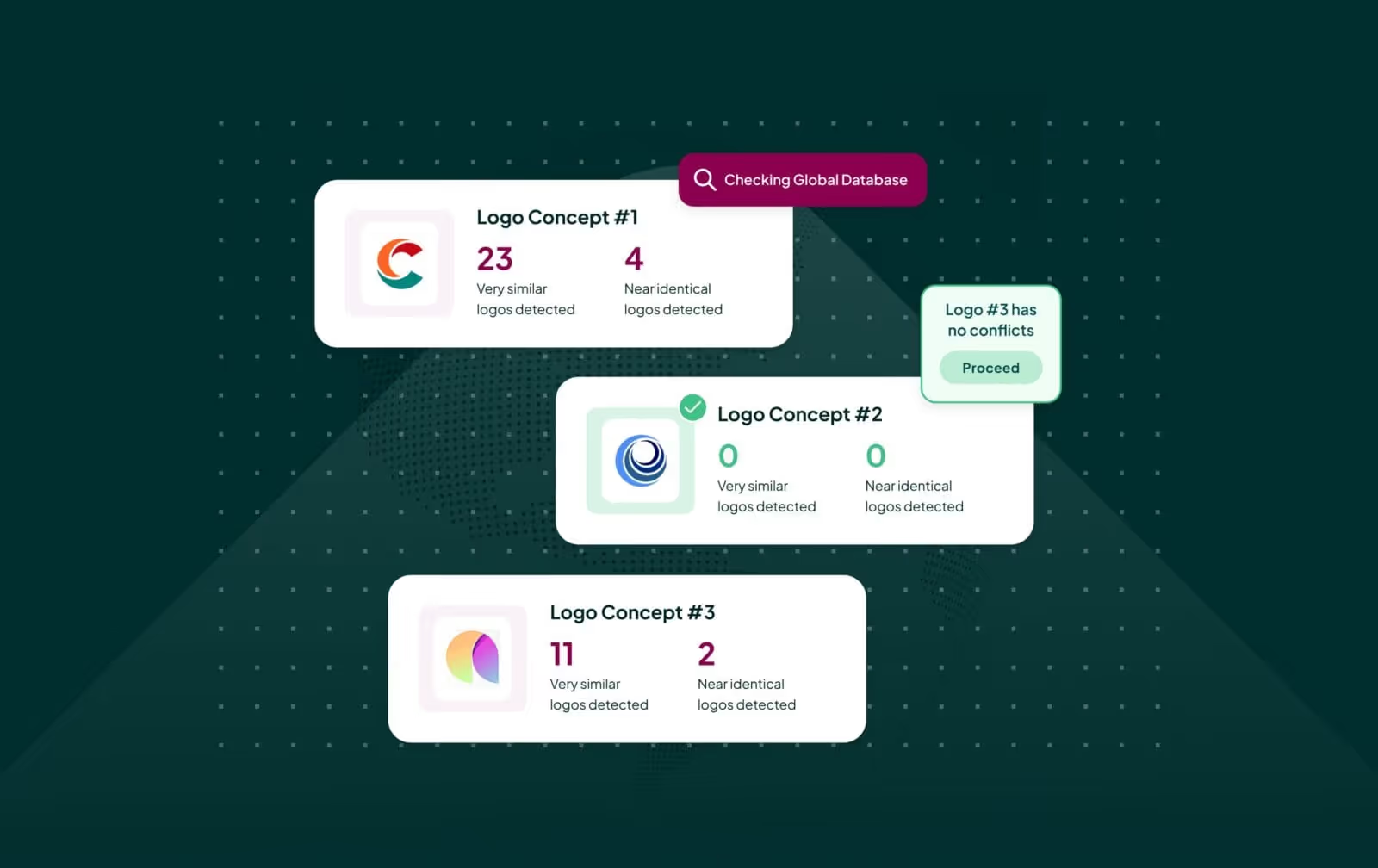
Narrowing down a list of potential new trademarks takes valuable time and resources, and when one or more candidates are under consideration, you need the most reliable options. Corsearch Screening makes it easy to knock out any marks unfit for full legal clearance.
™ or ®️? Whichever route you eventually decide to take with your marks, you can get started on your road to Trademark registration with our Trademark screening solutions.
FAQ
1. What happens if I use the ® symbol without actually having a registered Trademark?
Using the ® symbol without official registration is legally risky and may be considered fraud or false advertising, depending on your jurisdiction. It must only be used in the case of registered Trademarks and by the owner or licensee. Misusing the symbol can result in fines, injunctions, or even the loss of the right to ever register that mark in the future.
2. Where exactly should I place the ™ or the ® symbol?
Industry standards dictate placing the symbol immediately after the Trademarked word, phrase, or logo. It is most commonly placed in superscript in the upper right-hand corner (e.g. BrandName™). If placing it in the upper right is visually disruptive, the lower right-hand corner is the accepted alternative.
3. Do I need to use the symbol every single time my brand name appears in a document?
No, you do not need to clutter your copy. Best practice is to use the ™ or ® symbol prominently the first time the mark appears in a document, webpage, or advertisement. You should also ideally use it in headers or prominent titles. Subsequent mentions in the same body of text generally do not require the symbol.
4. How long do I have to use ™ before I can switch to ®?
You cannot switch to the ® symbol until you receive your official registration certificate from your region's Trademark office. The application process typically takes anywhere from several months to over a year. Many companies will opt to use the TM symbol for new goods or services in advance of and during the application process.
5. If I register my Trademark in my home country, can I use the ® symbol globally?
No, because Trademark rights are strictly geographic. The ® symbol must only be used in the regions in which you possess a valid Trademark registration. There are restrictions on use in regions where there is not a valid registration. If you operate internationally, you must apply for Trademarks in those specific countries or utilize international treaties like the Madrid Protocol.
6. Do registered Trademarks (®) ever expire?
Yes. Unlike copyrights or patents which eventually expire permanently, Trademarks can technically last forever (depending on the jurisdiction it is registered in) - but only if you actively maintain them. You must file renewal documents and pay fees at regular intervals (typically every 10 years, though this varies by region) to prove you are still actively using the mark in commerce.
7. Should I include Trademark symbols in my domain name or social media handles?
No, domain registrars and social media platforms do not allow special characters like ™ or ® in the actual URL (e.g. www.brandname™.com) or the account handle (e.g. @BrandName®). Instead, you should display the appropriate symbol in the header of your website, within your site's copy, or in the bio section of your social media profiles.
LEGAL DISCLAIMERS:
*This is an informational opinion article of the author. The views and opinions expressed in this article are those of the author and do not necessarily represent official policy or positions of Corsearch or its clients.
*The above trademarks and logos are not affiliated with or owned by Corsearch, and are used for illustrative purposes only as public record from the respective Trademark Offices.
*The above-mentioned brands are noted for factual reporting purposes only, the listing of the brands does not imply any relationship with Corsearch or its related entities.
See how PharmaCheck™ accelerates name qualification
From early-stage screening to post-clearance checks, we help you move faster with confidence — while avoiding missteps new, and help you move forward — faster.
Similar resources




Why It’s Time to Transition From the Corsearch Platform to TrademarkNow



The Intersection of AI and Brand Protection in 2026


Nice Classification 2026: The Essential Guide for Trademark Professionals