






.svg)
.png)






.svg)



Le paysage international des marques, composé d'un grand nombre de systèmes, de langues, de lois et de cultures, peut être quelque peu intimidant.
Fortunately, a number of treaties and systems are in place to help you streamline your international trademark application and leverage the most value from your intellectual property in many of the countries in which you do business.
Utilisés à bon escient, ces systèmes peuvent représenter un énorme gain de temps et d'argent pour les entreprises qui souhaitent déposer des demandes dans plus d'une juridiction.
1. Il existe trois accords clés relatifs aux marques internationales
The oldest of these dates back more than 130 years. The Paris Convention of 1883 is the oldest and largest of these. There are currently 177 member states, and this convention first provided the ability to claim an earlier filing date as a ‘priority right’, once it is filed within six months of your earlier filing in another member country.
The Madrid Agreement of 1891 has 55 member countries and along with the Madrid Protocol makes up the ‘Madrid System’ for the registration of international trademarks. At the time of writing, the Madrid Protocol of 1989 has 98 parties. The World Intellectual Property Office (WIPO) is the portal for the administration of policies regarding and processing of international applications.
Le protocole et l'arrangement de Madrid sont des systèmes parallèles - lorsqu'un pays est signataire des deux, c'est le protocole qui prévaut.
2. There Is No Such Thing as an "Internationally Effective" Trademark.
While the Madrid System certainly provides convenient access to a large number of regions in which you can enjoy protection, there is no system that can provide you with a truly international trademark.
WIPO will formally examine your trademark application, however, each contracting party (country) in which you apply to register will have the opportunity to examine the application under their system. You may still end up dealing with a number of contracting offices in different countries.
3. You don't file an application directly through WIPO
If you are applying from a country which is a party to the Madrid Agreement only, that application must be submitted through your national office and be based on a finalized registration. An application will not do. The mark being applied for must be identical in terms of both the mark itself and the goods and services applied for. While you can prepare a paper application to be submitted, handwritten forms will not be accepted!
Pour les demandes au titre du protocole de Madrid, il suffit d'une demande nationale plutôt que d'un enregistrement finalisé. La demande doit être certifiée par l'Office d'origine. Les offices nationaux examinent la demande et disposent d'un délai de 18 mois pour accepter ou refuser la marque.
There are different forms depending on your country designation so care must be taken to ensure you have the correct form!
4. Votre marque internationale dépend de votre enregistrement national pendant les cinq premières années
Bien que ce sujet ait fait l'objet de nombreux débats ces dernières années, la protection de votre enregistrement international de marque dépend actuellement de votre enregistrement national auprès de l'Office d'origine.
Should anything untoward occur with your home registration in the first five years of your international registration, it will be impacted too. If another company can find a valid reason to do so and apply to have your home registration cancelled within the dependency period, you could lose your international registrations too. This process is known as a ‘central attack’.
5. Vous pouvez ajouter d'autres pays ultérieurement
Une fois que vous êtes titulaire d'un enregistrement international, vous pouvez désigner d'autres "parties contractantes" dans le cadre d'une désignation postérieure. Qu'est-ce qu'une désignation postérieure ?
It’s a request made by you the holder for an extension of protection of your original international registration. Such requests for amendments can be made directly to the World Intellectual Property Office through their Subsequent Designation system.
6. Les conditions d'enregistrement et d'utilisation sont généreuses
- An international registration lasts for ten years from the date of registration.
- You are permitted up to five years before proof of use may be required where such use is not a requirement of registration in any contracting regions.
- It may be renewed for additional ten-year periods for a renewal fee.
7. La procédure de dépôt est relativement simple.
La procédure de dépôt s'effectue auprès de l'Office des marques de votre pays (l'Office d'origine), qui certifie votre demande. Vous pouvez déposer votre demande soit par le biais d'un système électronique (s'il est disponible dans votre pays), soit par le biais d'une demande sur papier.
NOTE: You can find the official list of requirements here.
Vous souhaitez en savoir plus sur nos solutions d'examen, de recherche et de surveillance des marques internationales ?
If you need an integrated trademark solution that supports you on every step of the trademark lifecycle, our end-to-end trademark technologies cover you all the way.
Perform your initial trademark Screening using a sophisticated tool that employs a proprietary phonetics engine to cover more than 1,000 databases. Then, work with expert researchers on our collaborative Search platform to better understand all the obstacles and risks flagged by our best-in-class search engine. When it comes to Watching, our diligent analysts connect with you virtually to provide high-quality, accurate data to help you maintain the integrity of your international trademarks.
Découvrez comment PharmaCheck™ accélère la validation des noms
Du dépistage précoce aux contrôles post-autorisation, nous vous aidons à avancer plus vite en toute confiance, tout en évitant les faux pas, et nous vous aidons à aller de l'avant — plus vite.
Ressources similaires



Pourquoi les risques liés aux marques commencent avant même le dépôt

Classification de Nice 2026 : le guide indispensable pour les professionnels des marques

TrademarkNow 2025 : l'année de l'innovation en matière d'IA
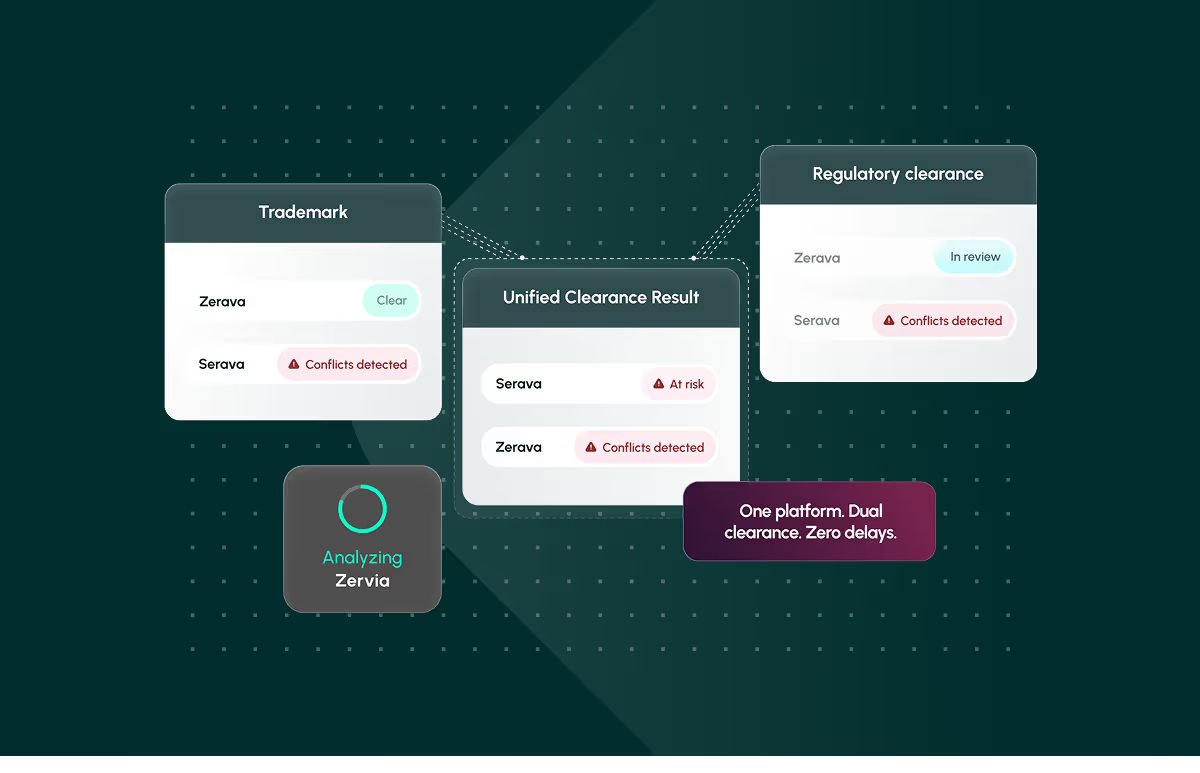
Rationalisation de l'autorisation des noms pharmaceutiques : Examen unifié des marques et de la réglementation
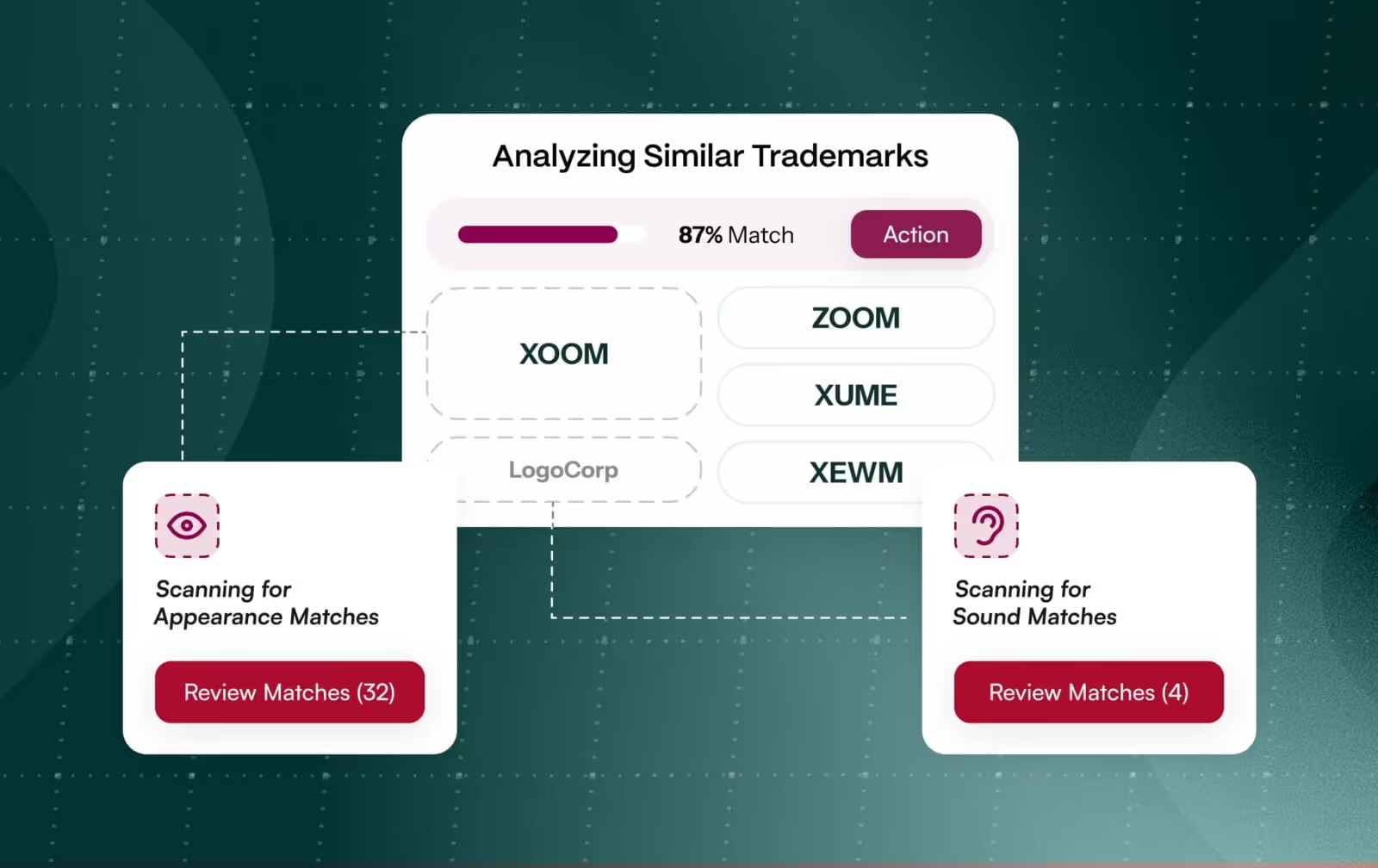
L'importance de la phonétique intelligente : Comment l'IA change la donne dans la recherche de marques déposées
La prochaine étape de la protection de la marque : L'importance de la surveillance des marques

Associer la surveillance des marques à Corsearch Zeal 2.0 pour une défense complète de la marque
L'état des marques en 2025 : Comment les équipes juridiques équilibrent l'automatisation et le contrôle par des experts

Marques de droit commun : protégez votre marque sans enregistrement

Une surveillance plus intelligente des marques : des solutions flexibles pour un marché encombré

Naviguer dans les actions de l'Office de l'USPTO au titre de la section 2(d) : Un guide pour les professionnels de la propriété intellectuelle

Analyse du "risque de confusion" dans les marques pharmaceutiques

L'intelligence hybride dans l'industrie des marques : Combiner l'IA et l'expertise humaine

Réflexion sur Alt Legal et Corsearch Live : Un récapitulatif perspicace

La croissance des enregistrements de dessins et modèles industriels a été sporadique au cours des dernières décennies
Contrefaçon de marque 101 : ce qu'il faut savoir pour protéger sa marque



Le défi de prouver la mauvaise foi dans les oppositions

Comment des solutions innovantes simplifient l'autorisation de marques pharmaceutiques
Tendances en matière de dénomination dans un paysage de marques encombré

Vaincre le risque de confusion dans les marques pharmaceutiques



Comment les agences de marketing et d'image de marque peuvent-elles résoudre le problème de la disponibilité des noms ?

Supprimer les obstacles : Comment Corsearch fait tomber les barrières pour les nouveaux noms de marques et de produits
Présentation du générateur de noms : Un outil révolutionnaire pour la création de noms de marques et de produits et l'obtention de marques déposées

Quelle est la différence entre un droit d'auteur et une marque ?

Accélérer la validation des marques pharmaceutiques avec PharmaCheck et TrademarkNow

Peut-on enregistrer comme marque des images réalistes de produits courants ?

L'importance de la protection des marques lorsque des œuvres protégées par le droit d'auteur tombent dans le domaine public

La Saint-Valentin : Dépôts de marques et conseils pour protéger votre propriété intellectuelle
Les changements à l'USPTO appellent à une vigilance accrue
NFTs : Demandes d'enregistrement de marques et application de la loi en ligne

Les NFT : Ami ou ennemi des propriétaires de marques ?

Comment créer, construire et maintenir la force de la marque ?


Quatre points à prendre en considération avant d'acheter une marque morte

La croissance des marques en Suisse exige des solutions de recherche innovantes

Neuf noms de fêtes protégés par des marques - À qui appartient Noël ?
Protection de la marque en ligne : Défis et solutions

Comment revendiquer une marque sur les six principales plateformes de médias sociaux ?
Qu'est-ce qu'une marque et pourquoi est-elle importante ?

Marques des fêtes de fin d'année - Trucs et astuces

L'évaluation de la marque dans les scénarios de fusion et d'acquisition : Opportunités et défis
Comment déterminer les classes de Nice pour les marques
Combien la contrefaçon de marque peut-elle vous coûter ?

Tendances en matière de vêtements de cannabis, de produits de beauté à base de CBD et d'élimination des logos

Opportunités et défis liés à la suppression de la marque dans l'industrie pharmaceutique
Suivre le leader - La voie à suivre pour réussir l'enregistrement d'une marque de cannabis
Atténuer les risques dans l'espace émergent du cannabis
Les nouvelles marques de la Légende de Zelda et 8 anniversaires de jeux vidéo en 2021
L'importance de la création de logos dans l'industrie de la mode
L'habilitation des marques dans l'industrie légale du cannabis : Questions fréquemment posées par les professionnels de la propriété intellectuelle
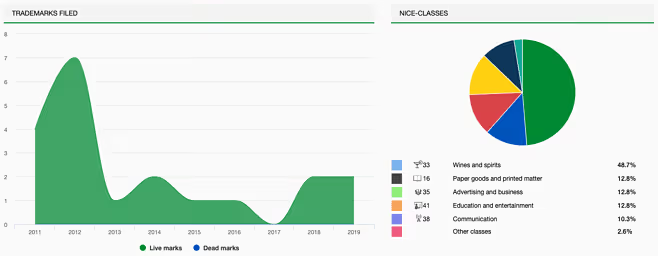
Plus qu'une simple marque - Les indications géographiques

Produits durables et marques vertes : 6 grandes marques qui ont lancé des marques écologiques
Opportunités et défis en matière de propriété intellectuelle sur les marchés légaux du cannabis
L'anatomie des marques pharmaceutiques sur les marchés actuels

Modification des stratégies d'établissement des marques dans l'industrie de la mode

Branding saisonnier - Comment préparer votre nouveau logo pour les fêtes de fin d'année

Quatre principes de common law en matière d'atteinte à la marque que vous devez connaître
Comprendre la mauvaise foi dans le droit européen des marques
POCA Online Search pour les recherches de marques pharmaceutiques et des sciences de la vie


Facebook Shops et Live Shopping : Un guide pour les professionnels des marques
Que le 4 vous protège : L'histoire d'une marque dans la Guerre des étoiles

Cinq tendances en matière de marques pharmaceutiques en 2020

COVID-19 : Tendances en matière de marques et crise sanitaire

L'affaire de la marque Sky v. SkyKick et ses conséquences pour les marques : Une perspective de propriété intellectuelle

Cinq tendances de l'industrie des marques à surveiller en 2020
TM Versus R - Quelle est la différence et pourquoi est-ce important ?

Les cinq principales évolutions du droit des marques en 2019


Dépistage des marques : 4 façons d'optimiser vos requêtes de recherche

Surveillance des marques : L'importance de la linguistique

Service de recherche de marques et rapports : Corsearch examine ce qu'il faut rechercher

Comment protéger vos marques sur les six principales plateformes de médias sociaux ?

Affaires récentes de contrefaçon de marque que vous avez peut-être manquées en 2018/19

La propriété intellectuelle de Game of Thrones : piratage, contrefaçons... et étranges tweets présidentiels


Représentation graphique et enregistrement international des marques

Combien de temps faut-il pour enregistrer une marque au Canada ?

Sept facteurs permettant d'identifier le risque de confusion entre les marques

Cinq marques vertes respectueuses de l'environnement - Going Green
Les noms de marque non enregistrés dans le monde commercial

Qu'est-ce qu'une recherche préliminaire de marques ?